
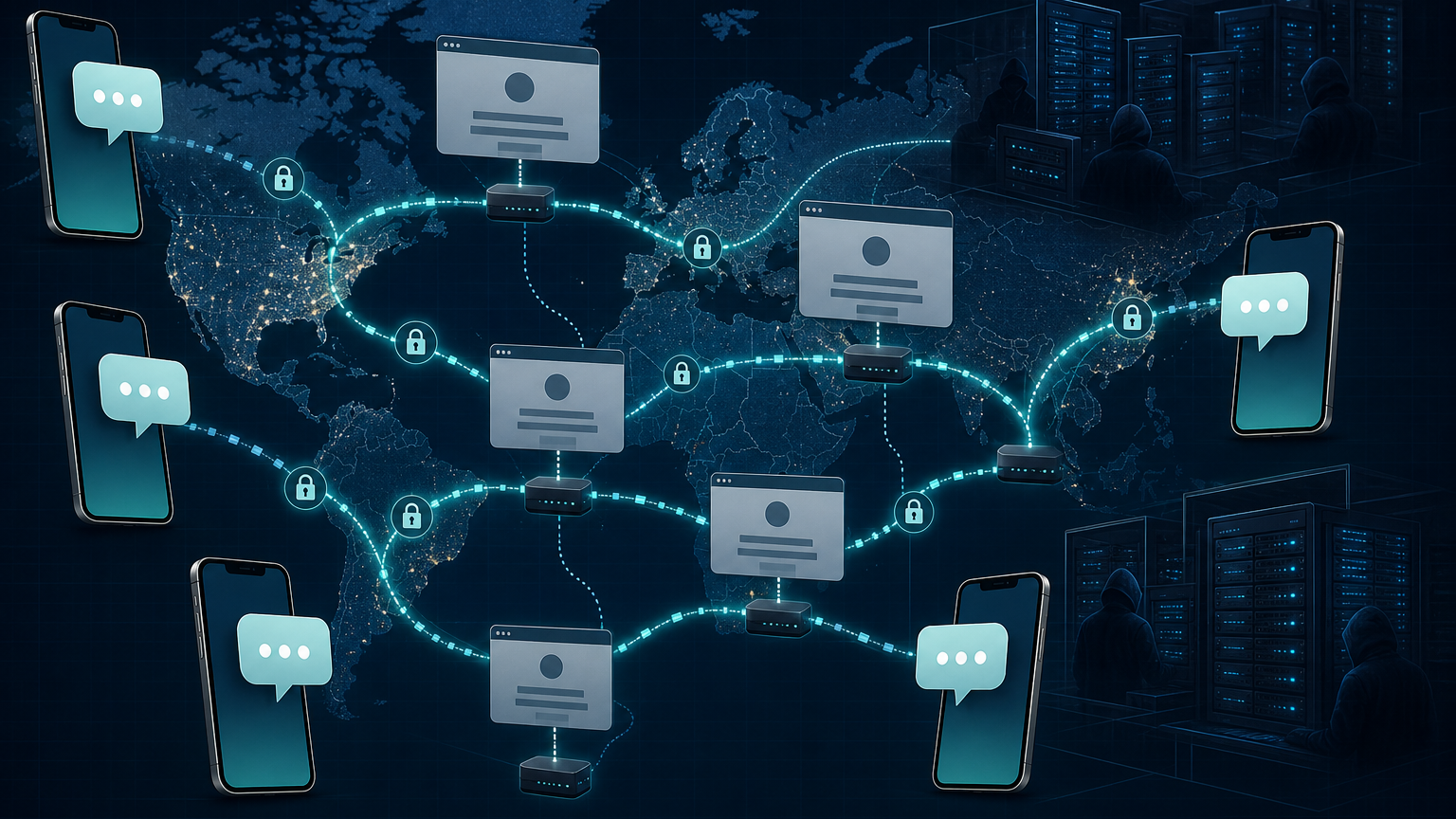
Group-IB’s latest research is a useful reminder that smishing is no longer just a low-effort SMS scam problem. The campaign they documented uses thousands of phishing domains, fake Cloudflare-style “Error 524” pages, geofencing, mobile device checks, obfuscated single-page applications, and encrypted WebSocket channels to steal payment data in real time.
The takeaway for small businesses, financial services firms, retailers, telecom-adjacent organizations, and government contractors is simple: modern fraud infrastructure looks a lot like mature intrusion infrastructure. It uses routing logic, anti-analysis controls, infrastructure masking, and rapid domain churn. If your defense plan is only “train users not to click,” you are already behind the curve.
What Group-IB reported
According to Group-IB’s analysis, the operation has been active since the second half of 2025 and has impersonated more than 260 brands across 72 countries. The researchers identified 4,389 phishing domain instances, with heavy concentration in Latin America and sector focus on telecommunications, financial services, and consumer rewards programs.
The campaign’s most interesting trick is its decoy layer. Instead of showing every visitor a credential theft page, the infrastructure can present fake Cloudflare timeout pages to analysts, scanners, or victims outside the desired region/device profile. Only visitors who match the attacker’s targeting rules are shown the malicious flow.
Why this matters
That matters because it breaks a lot of lightweight security review habits. A help desk analyst who opens a suspicious link from a desktop may see only an error page. A sandbox may record a benign-looking timeout. A brand-protection workflow may miss the live kit because the malicious content is gated by geography, device type, or other browser signals.
This is the same defensive challenge we see across more advanced threat activity: the payload is conditional. The visible page is not necessarily the real page. For organizations that rely on SMS messages, customer portals, rewards programs, payment links, delivery notifications, appointment reminders, or contractor onboarding workflows, that creates both fraud risk and brand-trust risk.
Defensive takeaways
- Do not validate suspicious links from one viewpoint. Test from mobile and desktop, multiple regions, and controlled network paths. Conditional phishing kits often behave differently depending on where and how they are accessed.
- Monitor brand abuse like infrastructure, not just content. Track lookalike domains, hosting providers, certificate issuance, passive DNS, URL patterns, and repeat kit fingerprints.
- Treat SMS as an untrusted delivery channel. Avoid sending high-risk payment or account recovery flows through plain SMS links when stronger authenticated channels are available.
- Instrument fraud and security teams together. Real-time payment theft often shows up first as customer complaints, chargeback patterns, or brand impersonation reports before it becomes a classic SOC alert.
- Prepare customer-facing response playbooks. If your brand is impersonated, you need fast takedown requests, customer notification language, domain blocking guidance, and support escalation paths ready before the campaign spikes.
Bulwark Black assessment
This campaign is a good example of why phishing defense needs to move beyond awareness training. User education helps, but it does not dismantle infrastructure, detect conditional payload delivery, or protect customers from convincing brand impersonation at scale.
For SMBs and government contractors, the practical move is to build a lightweight fraud-infrastructure watch capability: monitor your domains and brand names, review how customer links are delivered, lock down account recovery flows, and make sure your security tooling can inspect suspicious links from more than one execution context.
The organizations that handle this well will not be the ones that eliminate every malicious SMS. They will be the ones that detect impersonation early, reduce the blast radius, and make it hard for criminals to turn brand trust into payment theft.
Original source: Group-IB — “Error 524 Decoy: Unmasking a Global Smishing Operation Hiding Behind Error Pages”.