
An Iran-linked group’s claim against California Water Service is a useful reminder for defenders: the first question in any critical-infrastructure incident is not whether a threat actor made a dramatic claim. It is whether the affected environment has hard separation between business systems, telemetry platforms, and operational technology.
Reporting from SJV Water via The Fresno Bee said Handala claimed access tied to California Water Service communities including Bakersfield, Visalia, and Chico. Cal Water told the outlet that a preliminary scan found no signs of compromise within internal IT, water production, or delivery systems, and that the investigation was continuing. Security Magazine’s follow-up analysis cited assessments that the visible evidence pointed toward a GPS correction server and a customer billing database rather than confirmed OT or ICS disruption.
What matters here
This is exactly the kind of incident that creates confusion for executives, customers, and local governments. A threat actor can publish screenshots, claim operational access, and imply physical-world consequences long before defenders finish scoping the event. For water utilities, small public agencies, and contractors supporting critical infrastructure, that gap between claim and verification is where panic and bad decisions happen.
The defensive lesson is not “ignore the claim.” It is “validate the blast radius fast.” Billing data, customer portals, GPS/telemetry services, remote access tools, and OT control systems have very different risk profiles. If those systems are flat, loosely connected, or share administrative paths, then even a limited business-system compromise can become a much larger operational concern.
Defensive takeaways for SMBs, utilities, and government contractors
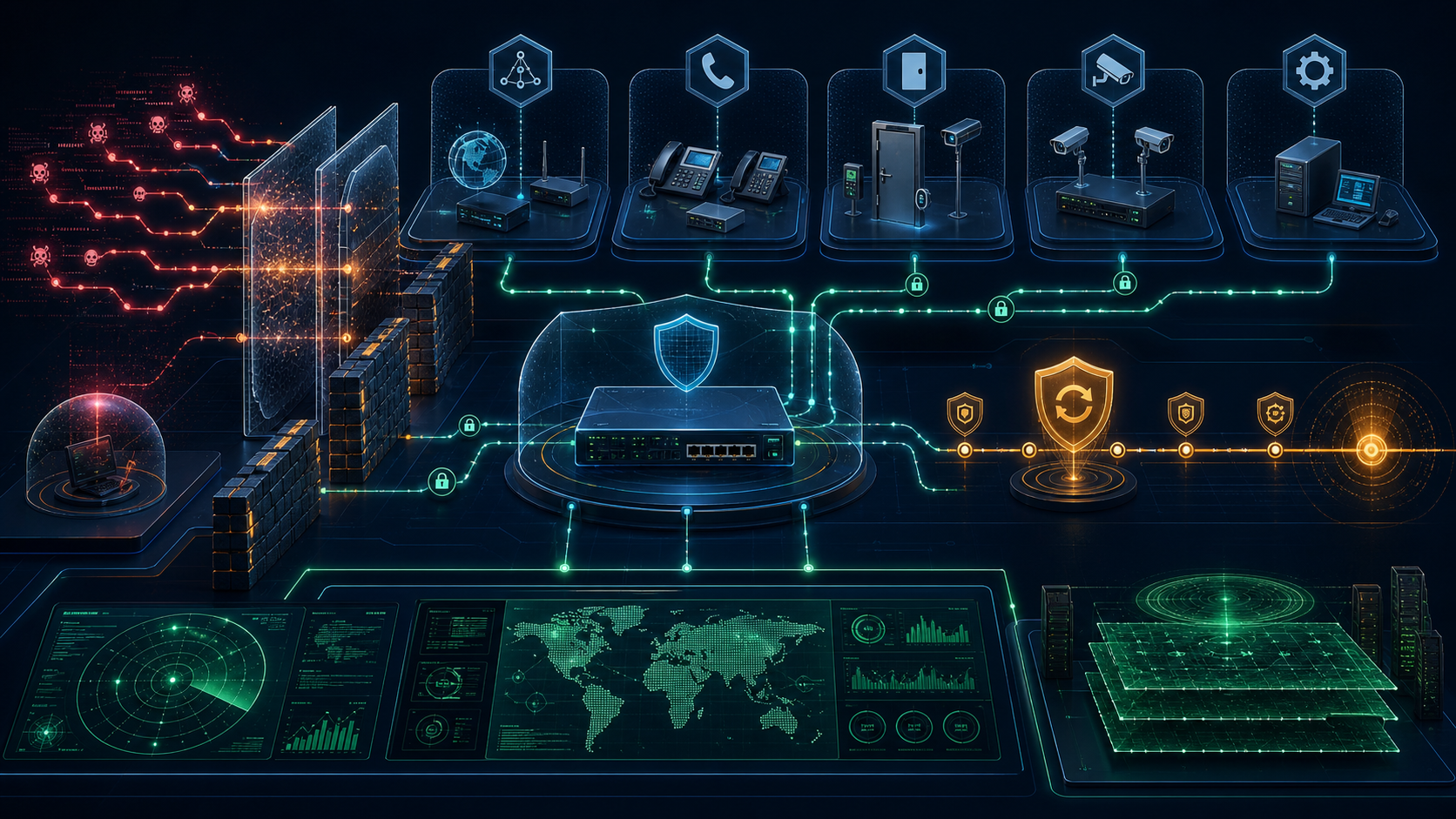
- Separate IT and OT by design. Billing, customer service, email, and file-sharing systems should not provide a practical route to water production, control systems, or telemetry management.
- Inventory “near-OT” systems. GPS correction servers, remote monitoring platforms, engineering workstations, historian systems, and vendor portals often sit in the gray zone between business IT and operations.
- Use phishing-resistant MFA for privileged access. Any account that can reach administrative portals, remote access tools, network gear, or operational support systems should be treated as high impact.
- Hunt for data staging and outbound transfer. Claimed data theft should trigger review of unusual compression, archive creation, cloud uploads, remote access activity, and large outbound flows.
- Prepare public-claim triage in advance. Have a process for validating actor claims, preserving evidence, coordinating with legal/communications, and avoiding premature statements about operational impact.
Bulwark Black assessment
Based on the public reporting available so far, this should be treated as a warning shot rather than proof of water-system disruption. That distinction matters. Overstating the event helps the actor’s psychological objective; understating it risks missing a pivot path that could be weaponized later.
The right response is disciplined scoping: confirm which systems were touched, prove whether OT pathways exist, rotate exposed credentials, review remote access, and preserve logs before they roll off. For smaller operators and contractors, the practical goal is simple: make sure a billing compromise stays a billing compromise.
Sources: SJV Water / The Fresno Bee; Security Magazine.