A large GitHub backdooring campaign called Megalodon is a useful warning for every small business, software team, and government contractor that relies on GitHub Actions for builds or deployments: CI/CD is no longer just automation plumbing. It is part of the credential perimeter.
SafeDep reported that on May 18, 2026, an automated campaign pushed malicious workflow changes into more than 5,500 public GitHub repositories within roughly six hours. CSO covered the same campaign and highlighted the practical risk: malicious commits were disguised as routine CI maintenance while targeting secrets exposed during build execution.
Original research: SafeDep, “Megalodon: Mass GitHub Repo Backdooring via CI Workflows”. Additional reporting: CSO Online.
What happened
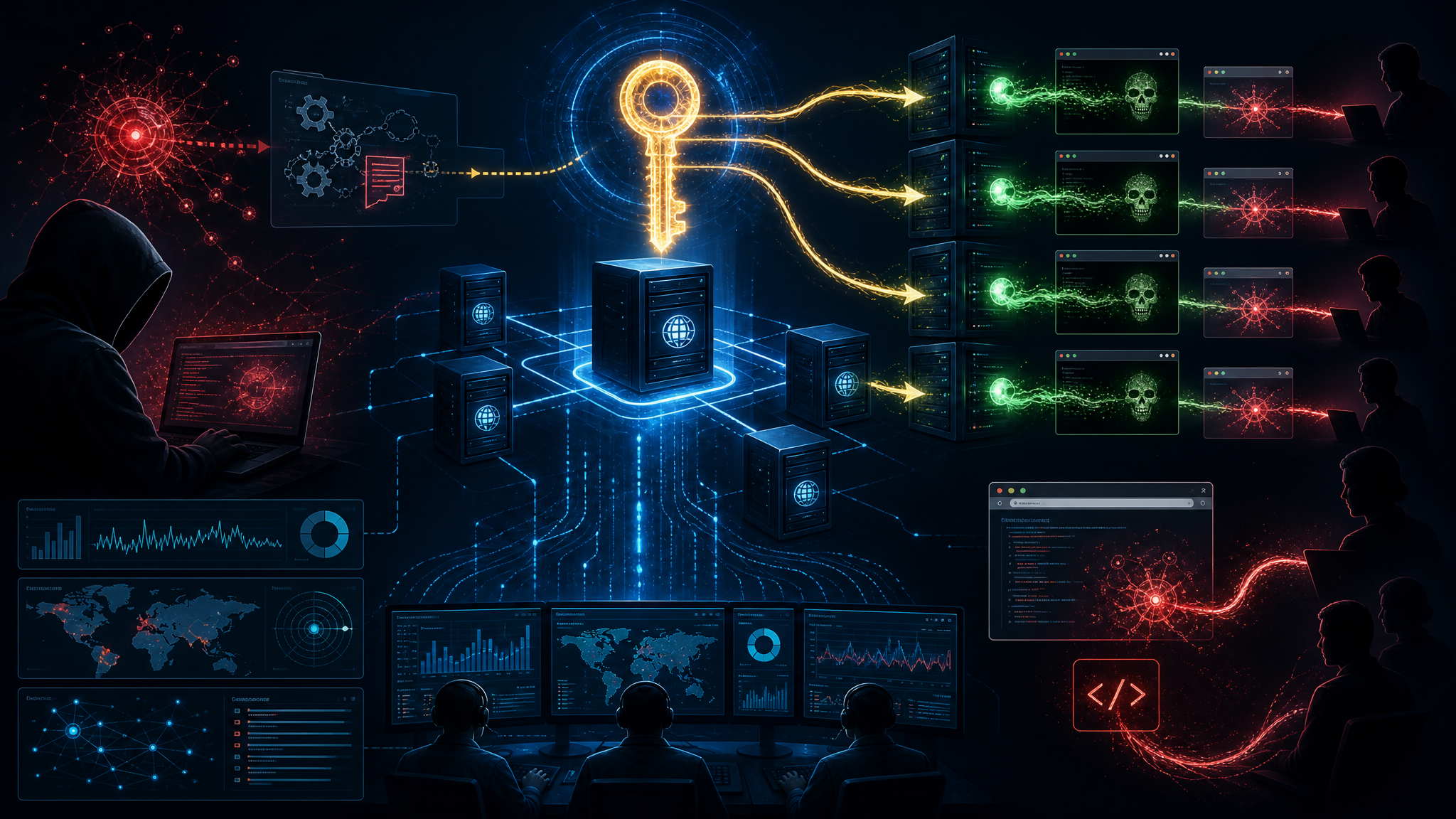
The campaign modified GitHub Actions workflow files and embedded base64-encoded shell payloads. Those payloads were designed to run inside the CI environment and collect sensitive material such as cloud credentials, SSH keys, package registry tokens, Kubernetes configuration, Terraform credentials, shell history, and GitHub Actions OIDC token data.
The important detail is not just the scale. It is the delivery path. The malicious commits used bot-like author names and generic messages such as CI optimization or pipeline updates. That is exactly the kind of change many teams are conditioned to ignore, especially when repositories are noisy and automation commits are normal.
SafeDep described two major variants. One variant added a workflow that could trigger broadly on repository activity. Another used workflow_dispatch, making the backdoor more dormant and allowing an attacker to trigger execution later through GitHub’s API. That distinction matters because a poisoned workflow does not have to execute immediately to be dangerous. It can sit quietly until the right secret is present.
Why it matters
For many organizations, GitHub Actions is connected directly to production infrastructure. A single workflow can mint short-lived cloud credentials through OIDC, publish packages, deploy containers, push images, or reach internal artifacts. If an attacker can alter that workflow, they may not need to compromise a developer laptop or a production server first. The build system becomes the bridge.
This is especially relevant for SMBs and government contractors because CI/CD often sits in a trust gap. Teams may require MFA for GitHub users, but still leave long-lived personal access tokens, deploy keys, broad repository permissions, or overly permissive cloud federation policies in place. Megalodon shows how quickly that gap can become an enterprise-wide secret-harvesting event.
What defenders should check now
- Audit recent workflow changes. Review commits to
.github/workflows/, especially changes made without a pull request or by bot-like identities such as build-bot, auto-ci, ci-bot, or pipeline-bot. - Look for suspicious workflow names and triggers. Pay attention to new or modified workflows using broad
push,pull_request_target, or unexpectedworkflow_dispatchtriggers. - Search for encoded shell execution. Base64 decode-and-execute patterns in CI files should be treated as high-risk until proven legitimate.
- Review cloud audit logs. If GitHub OIDC is enabled, look for token exchanges from unexpected repositories, branches, workflows, or run IDs.
- Rotate exposed secrets. If a repository was affected, assume CI-visible credentials were exposed. Rotate cloud keys, SSH keys, registry tokens, package publishing tokens, and webhook secrets.
- Restrict GitHub token permissions. Set default workflow permissions to read-only where possible and explicitly grant write or OIDC permissions only to workflows that need them.
Bulwark Black assessment
Megalodon is another sign that software supply chain attacks are moving from package names and typosquatting into the automation layer itself. Attackers are targeting the place where code, identity, secrets, and deployment authority converge.
The defensive answer is not “stop using GitHub Actions.” The answer is to treat CI/CD like production infrastructure. Workflow changes need review. OIDC trust policies need conditions. Secrets should be scoped, short-lived, and monitored. Most importantly, build pipelines should not have more access than the application or environment actually requires.
If your organization supports federal customers or handles controlled business data, this is also a governance issue. CI/CD compromise can become source-code exposure, credential theft, unauthorized cloud access, and downstream supply chain risk in one move. That makes pipeline security a board-level and contract-risk conversation, not just a DevOps cleanup task.
Bottom line: if a workflow can deploy, publish, or mint credentials, it deserves the same scrutiny as privileged production code.