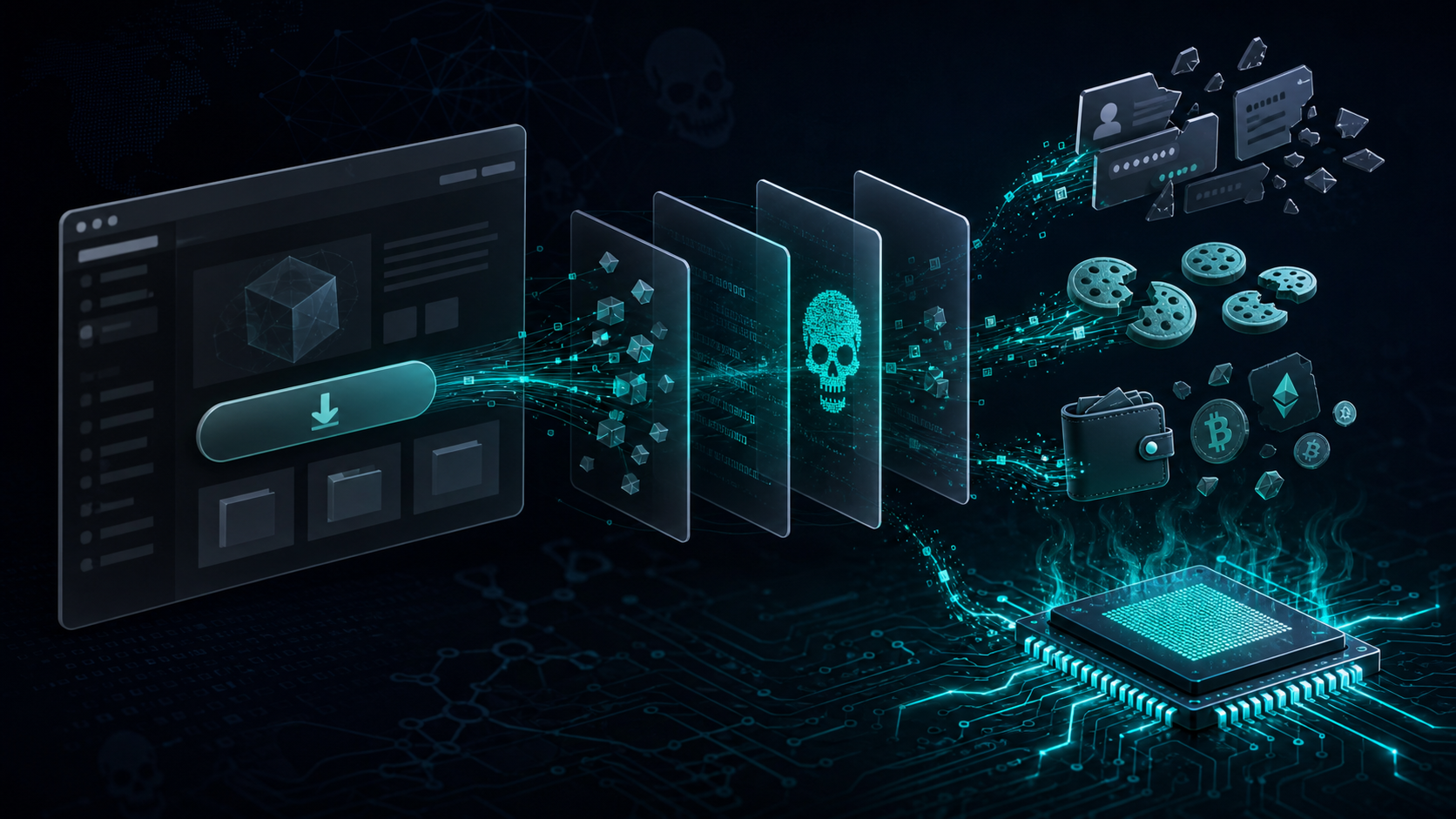
Software supply chain risk is not limited to obviously malicious new packages. The Laravel-Lang compromise shows a more dangerous pattern: attackers can abuse trusted release mechanics so existing dependency names, historical version tags, and normal autoload behavior become the execution path.
According to The Hacker News, researchers found multiple Laravel-Lang PHP packages compromised to deliver a cross-platform credential stealer. Socket reported that the affected third-party localization packages included laravel-lang/lang, laravel-lang/http-statuses, laravel-lang/attributes, and laravel-lang/actions, with more than 700 versions affected across rapidly published or rewritten tags.
What made this attack dangerous
The key issue was not just that malicious code appeared in a dependency. The more operationally important detail is how it executed. The malicious helper file was registered through Composer autoload behavior, meaning a vulnerable application could run the payload during normal startup rather than through a developer calling a suspicious function.
That matters for small businesses, SaaS teams, MSPs, and government contractors because PHP applications often run with access to environment variables, database credentials, API tokens, cloud metadata, CI/CD secrets, and deployment configuration. If a dependency executes inside that context, the attacker may not need to exploit the web app directly. The app’s own trusted runtime can become the collection point.
What the stealer targeted
Research summarized by The Hacker News, Socket, StepSecurity, and Aikido describes a broad credential-theft payload. Reported collection targets included cloud metadata, AWS and Google Cloud credentials, Azure tokens, Kubernetes service account material, Vault tokens, CI/CD runner secrets, GitHub Actions and GitLab Runner configuration, browser data, password manager artifacts, SSH keys, Docker auth files, .env files, wp-config.php, and crypto wallet material.
That target list is a reminder that developer and build environments are not low-value endpoints. They often hold the keys that connect source code, production infrastructure, customer data, and deployment automation.
Defensive takeaways
- Audit Composer dependencies immediately. Identify whether any Laravel-Lang packages were installed or updated around May 22-23, 2026, especially from the affected package names.
- Treat autoloaded dependency code as execution risk. Review
composer.jsonentries usingautoload.files, not just package names and version numbers. - Rotate exposed secrets if a build or app host may have executed affected versions. Prioritize cloud keys, CI/CD tokens, GitHub/GitLab credentials, database passwords, SSH keys, and deployment credentials.
- Review outbound traffic. Hunt for connections to reported infrastructure such as
flipboxstudio[.]infoand for unexpected PHP execution from temporary directories. - Pin and verify dependencies. Lockfiles help, but this incident shows why teams also need provenance checks, release monitoring, and alerts for unusual tag or package metadata changes.
- Reduce secret exposure in runtime environments. Avoid leaving broad cloud permissions, long-lived API keys, and CI/CD credentials available to every application process.
Bulwark Black assessment
This incident belongs in the same risk bucket as npm, PyPI, and CI/CD compromise: the attacker is not simply trying to infect one developer workstation. They are trying to reach the trust layer that turns code into production access.
For SMBs and government contractors, the practical move is to stop treating dependency updates as a pure engineering workflow. Dependency changes should create security telemetry: what changed, who approved it, what code now autoloads, what secrets that runtime can access, and whether the update caused new outbound network behavior.
The strongest defense is boring but effective: maintain dependency inventory, monitor lockfile changes, restrict runtime secrets, segment build systems, and rehearse token rotation before a compromise forces the issue.
Original source: The Hacker News — Laravel-Lang PHP Packages Compromised to Deliver Cross-Platform Credential Stealer
Additional research: Socket, StepSecurity, and Aikido Security.