
AI is not turning ransomware crews into fully autonomous operators overnight. The more immediate problem is more practical: it is helping attackers compress the research, build, test, and retry cycle that used to slow down evasive tooling.
That is the important lesson from new reporting by Sophos X-Ops, surfaced in Feedly via BleepingComputer, on a ransomware-linked toolkit that used AI-assisted development workflows to support endpoint detection and response (EDR) evasion testing and Active Directory discovery.
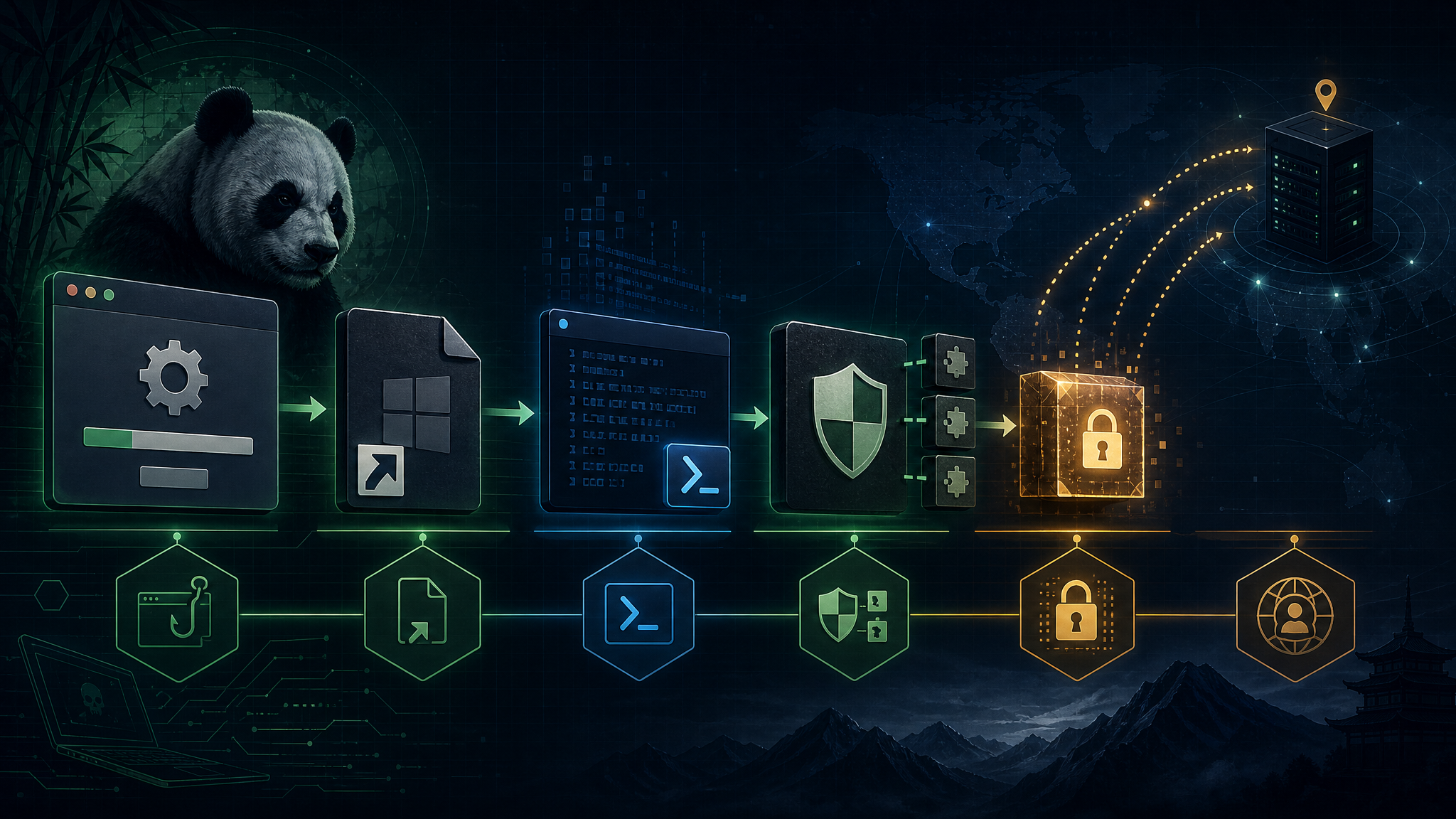
According to Sophos, analysts found an attack framework containing Cobalt Strike profiles, Telegram-based command-and-control routing, Python tooling for shellcode injection into legitimate Windows executables, and a Cloudflare Worker redirector used to obscure backend infrastructure. BleepingComputer summarized the case as an AI-built ransomware toolkit that automates AD discovery and helps test EDR bypasses.
What makes this different
The key detail is not that AI was embedded inside the malware or autonomously operating inside victim environments. Sophos specifically described a human-driven workflow where AI tools helped coordinate development, testing, documentation, and revision. That matters because it changes the economics of offensive tooling.
Attackers no longer need to rely only on a single skilled malware developer manually translating public research into working code. They can use agentic development environments to ingest security research, map techniques to MITRE ATT&CK, generate test modules, run them in lab environments, review failures, and iterate until the payload is harder to detect.
For defenders, that means public offensive research, proof-of-concept techniques, and red-team tradecraft can be operationalized faster. The window between “interesting technique” and “usable ransomware precursor capability” keeps shrinking.
Why SMBs and government contractors should care
Small businesses and government contractors often assume advanced EDR evasion is a large-enterprise problem. That assumption is getting weaker. If ransomware affiliates can use AI-assisted workflows to package bypasses, AD discovery panels, and post-exploitation tooling into reusable kits, the sophistication required at the keyboard drops.
The likely impact is not magic malware. It is more repeatable tradecraft:
- Faster adaptation when one payload is blocked
- More variants of loaders, DLLs, and executables for defenders to triage
- Better abuse of legitimate infrastructure such as Telegram, Cloudflare, and remote management pathways
- More targeted Active Directory discovery before ransomware deployment
- Shorter dwell time between initial access and control validation
That puts pressure on the basics: identity hygiene, endpoint telemetry, segmentation, and response readiness. AI-assisted attackers still need credentials, execution, lateral movement, and persistence. The defensive job is to make those steps noisy, constrained, and recoverable.
Defensive takeaways
1. Treat EDR as a signal source, not a silver bullet
EDR remains essential, but this case reinforces why teams need layered controls. If the attacker is actively testing payloads against major EDR products, detection cannot depend on one product alerting on one binary. Collect process creation, script execution, authentication, DNS, proxy, and cloud control-plane telemetry where possible.
2. Watch for lab-like attacker artifacts
Payloads staged from user document paths, odd testing directories, repeated executable builds, suspicious Python tooling, and rapid variant churn can indicate adversary-side experimentation bleeding into a real environment. Do not dismiss these as generic malware noise.
3. Lock down Active Directory discovery paths
Automated AD discovery is valuable because it tells the attacker where privilege, trust, and data live. Monitor for abnormal LDAP queries, BloodHound-like enumeration, Kerberoasting indicators, unusual domain controller access, and account behavior that does not match normal administrative patterns.
4. Reduce credential reuse and standing privilege
Ransomware operations still thrive on overprivileged accounts, stale admin groups, exposed service credentials, and weak MFA coverage. Contractors handling government or regulated data should prioritize phishing-resistant MFA for admins, tiered admin models, local admin reduction, and rapid disablement of unused accounts.
5. Validate controls before the attacker does
If attackers are iterating against defensive products, defenders should also test their own stack. Run safe detection validation exercises, confirm that key behaviors generate alerts, and measure response time. The goal is not to prove that every payload is blocked. The goal is to know which behaviors are visible and which gaps need compensating controls.
Bulwark Black assessment
This is the practical version of the AI cyber threat story: not sentient malware, but faster engineering. AI-assisted ransomware tooling turns evasion into an iteration problem. That favors teams that continuously validate controls, reduce identity blast radius, and respond to behavior instead of waiting for known indicators.
For SMBs and government contractors, the right response is not panic-buying another tool. The proper move is to tighten the foundations: patch quickly, enforce strong authentication, monitor AD behavior, keep EDR broadly deployed, test detections, and maintain recovery plans that assume at least one control will fail.
Original sources: Sophos X-Ops and BleepingComputer.