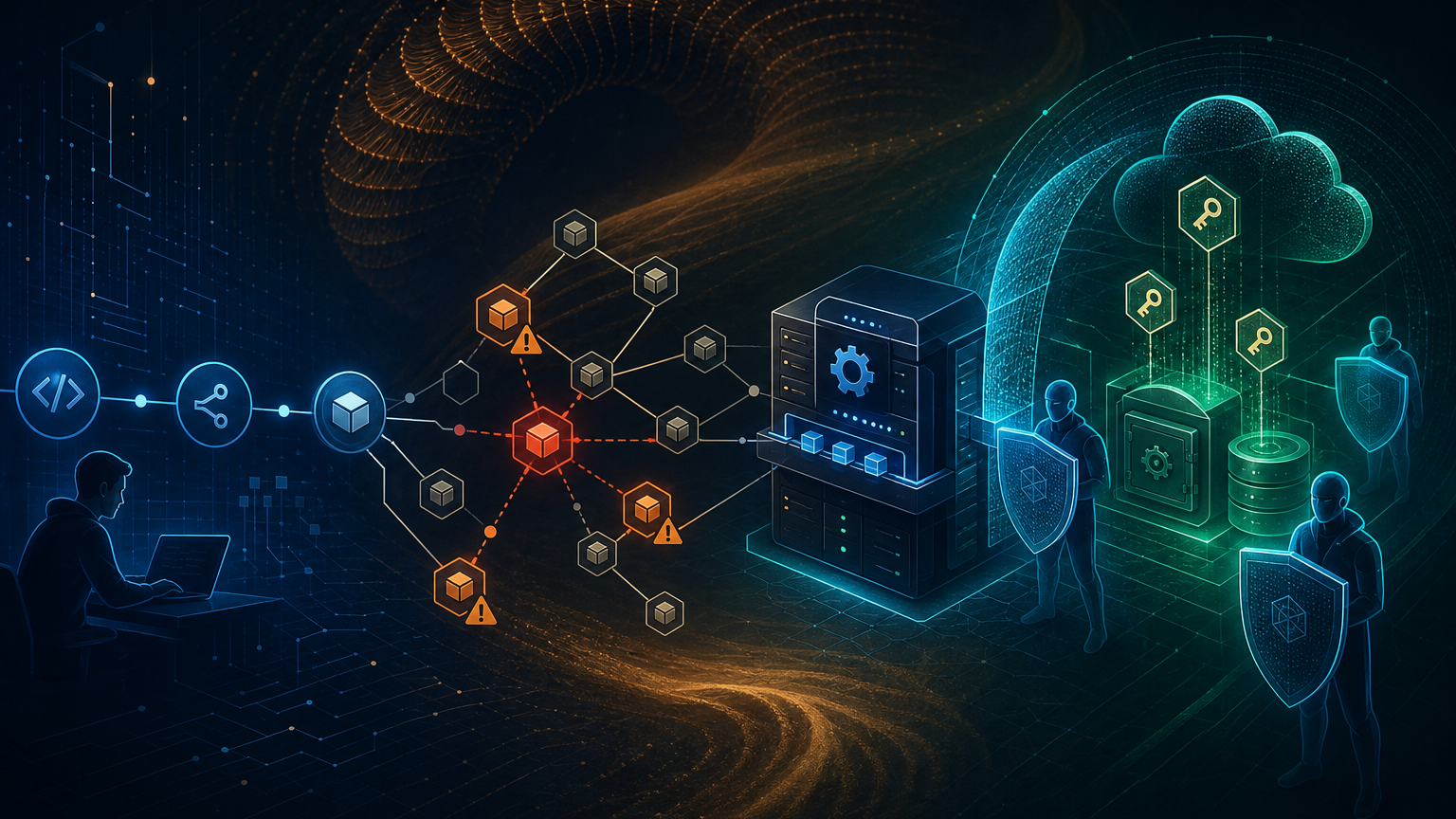
Microsoft and Socket are tracking a fast-moving npm supply-chain incident tied to the Mini Shai-Hulud campaign, this time affecting packages in and around the @antv ecosystem. The core lesson for defenders is not just “patch dependencies faster.” It is that modern package malware is increasingly built to land inside build systems, steal CI/CD secrets, and turn trusted automation into the next stage of the compromise.
According to Microsoft, a compromised maintainer account was used to publish malicious versions of widely used npm packages. Socket reported hundreds of compromised package versions across hundreds of packages, including packages connected to data visualization, charting, graphing, mapping, and React component ecosystems. One major downstream dependency called out in reporting was echarts-for-react, which has significant weekly usage and can amplify exposure through transitive dependency chains.
Original source: Microsoft Security Blog — Mini Shai Hulud: Compromised @antv npm packages enable CI/CD credential theft. Additional reporting: Socket — Mini Shai-Hulud Hits @antv Ecosystem.
What makes this campaign dangerous
The malicious payload was designed for install-time execution. In practical terms, that means the compromise can trigger when a developer workstation, build runner, or automated pipeline installs dependencies. Microsoft described a payload that checks for GitHub Actions on Linux, then targets credentials across GitHub, AWS, Vault, npm, Kubernetes, and 1Password. Socket’s analysis also highlighted broad CI/CD awareness across multiple build platforms.
That matters because CI/CD environments often hold the keys to the kingdom: repository tokens, package publish permissions, cloud credentials, container registry access, Kubernetes service account material, signing workflows, and deployment secrets. If malware reaches that layer, the blast radius can move from one poisoned dependency to source-code manipulation, package republishing, cloud access, and downstream customer exposure.
The campaign also appears to include fallback exfiltration through trusted developer infrastructure. Microsoft noted GitHub API abuse and public repository creation patterns associated with the campaign. This is an important detection point: not every exfiltration path will look like a suspicious connection to an unknown server. Sometimes the attacker’s backup channel is the same platform your engineering team already uses every day.
Why SMBs and government contractors should care
Even small teams can have enterprise-level supply-chain exposure. A government contractor, SaaS provider, MSP, or internal software team may not maintain a large engineering department, but it may still rely on npm, GitHub Actions, cloud deployment tokens, and automated releases. That is exactly the environment this kind of malware is built to exploit.
For contractors, there is also a compliance and trust angle. A compromised build pipeline can affect software integrity, customer data, audit evidence, FedRAMP-adjacent controls, incident reporting obligations, and the ability to prove that delivered artifacts came from a controlled process. Supply-chain security is not just a developer problem anymore; it is part of organizational risk management.
Defensive takeaways
- Identify exposure quickly. Search package manifests, lockfiles, artifact inventories, and build logs for affected
@antvpackages and downstream dependencies such asecharts-for-react. - Review the exposure window. Any runner or developer system that installed affected versions should be treated as potentially exposed, especially if it had access to GitHub, npm, cloud, Vault, Kubernetes, or deployment credentials.
- Rotate secrets with priority. Focus first on tokens with write, publish, deployment, cloud-admin, repository-admin, or organization-level permissions. Do not stop at npm tokens if CI/CD runners had broader access.
- Restrict lifecycle scripts where possible. Use controls such as
npm install --ignore-scriptsin validation workflows and carefully gate builds that require package lifecycle execution. - Pin and review dependencies. Avoid blind automatic upgrades for critical build paths. Lock dependencies, review unexpected version changes, and add malicious-package intelligence to dependency scanning.
- Hunt build telemetry. Look for unexpected Bun runtime installation, suspicious Node/npm lifecycle execution, outbound connections from build jobs, unusual GitHub repository creation, and suspicious package publishing activity.
- Reduce CI/CD token scope. Build runners should use short-lived, least-privilege credentials. Separate read-only dependency installation from publish/deploy jobs wherever possible.
Bulwark Black assessment
Mini Shai-Hulud reinforces a pattern we keep seeing: attackers are treating build systems as high-value identity platforms. The dependency is the delivery vehicle, but the real target is credential access inside automation. Organizations that only scan endpoint malware and patch application servers will miss the control plane where this kind of campaign does the most damage.
The right response is not panic. It is disciplined containment: map dependency exposure, identify which systems installed affected packages, rotate impacted secrets, and harden CI/CD so a future package compromise cannot automatically inherit broad cloud or repository permissions. For smaller teams, the biggest win is simple but powerful: treat build runners as production systems, not disposable developer utilities.
If your organization relies on npm-based build pipelines, this is a good moment to review dependency governance, CI/CD permissions, and secret rotation procedures before the next package compromise turns into an incident response problem.