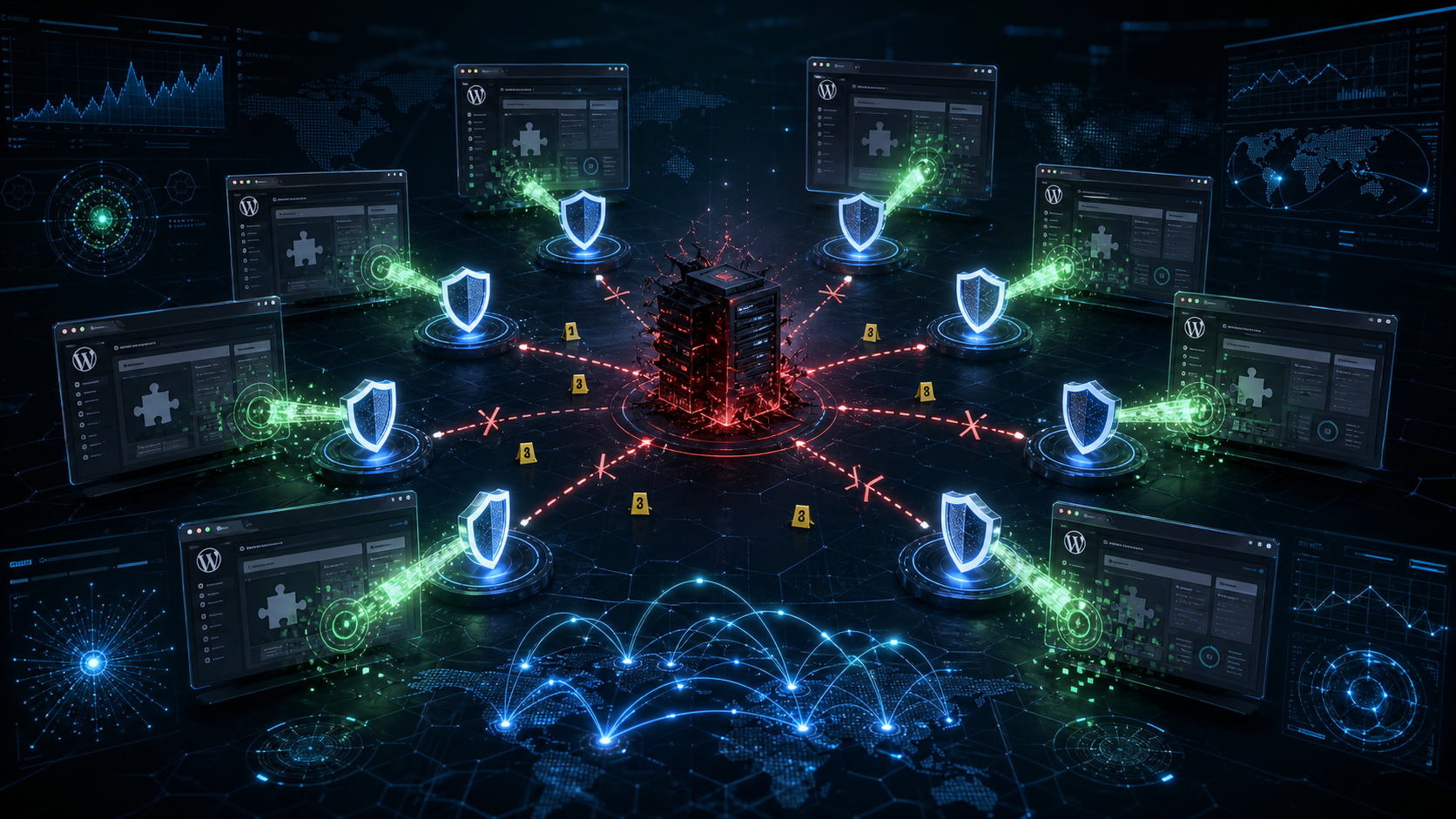

CloudSEK’s writeup on Operation Escaneo is worth attention because it is not just another regional breach story. The exposed attacker infrastructure described in the report shows a financially motivated operation behaving more like a disciplined intrusion team: reconnaissance at scale, perimeter appliance exploitation, tunneling, credential theft, and data staging against Latin American government, financial, utility, transportation, and telecommunications targets.
For SMBs, public-sector suppliers, and government contractors, the lesson is direct: edge devices and management planes are no longer “set and forget” infrastructure. VPNs, firewalls, routers, SAP/Oracle systems, and remote access paths are now part of the primary attack surface.
What happened
CloudSEK reported that it discovered an exposed attacker staging server tied to Operation Escaneo. The artifacts reportedly mapped a broad intrusion toolchain spanning automated reconnaissance, exploit staging, web shells, tunneling, credential harvesting, lateral movement, and data exfiltration. The campaign focused primarily on Mexico, with additional activity tied to Ecuador and Portugal.
The reporting links the operation to targeting across government ministries, tax authorities, utilities, transportation, telecommunications, and financial services. CloudSEK attributed the activity with medium confidence to MexicanMafia, also known as PanchoVilla.
A secondary summary from CySecurity News emphasized the same defensive signal: regional financially motivated actors are combining opportunistic access with more advanced tradecraft.
Why this matters
The important part is not one specific CVE. It is the operating model. Operation Escaneo appears to have used a flexible collection of public-facing exploitation paths rather than depending on a single exploit. CloudSEK’s analysis references enterprise perimeter and infrastructure targets including Fortinet, Ivanti, Cisco, Apache Tomcat, Log4Shell-era exposure, SAP, and Oracle database paths.
That matters because many organizations still treat perimeter appliances as appliances, not as high-risk servers with privileged network visibility. Once an attacker owns a VPN, firewall, router, or ERP service account, the breach can move from “external vulnerability” to “internal trust abuse” very quickly.
Defensive takeaways
- Prioritize edge-device inventory. Know every internet-facing VPN, firewall, router admin panel, remote access appliance, MFT system, and management portal. Unknown exposure is where campaigns like this start.
- Patch perimeter devices faster than workstations. VPN and firewall CVEs should be emergency-change candidates when exploitation is plausible. These systems sit directly on the attack path.
- Rotate credentials after appliance compromise. Patching a Fortinet, Ivanti, Cisco, or similar device is not enough if credentials, configs, session material, private keys, or internal routes were exposed.
- Hunt for tunneling and proxy behavior. Chisel, Neo-reGeorg-style web shells, GRE tunnels, SOCKS proxies, unexpected reverse tunnels, and unusual outbound connections from infrastructure servers should trigger review.
- Limit service-account blast radius. SAP, Oracle, database, and directory service accounts should have scoped permissions, monitored usage, and strong secrets rotation. Assume attackers will search for them after initial access.
- Monitor configuration exports. Firewall and router config downloads are high-signal events. They often contain topology, VPN definitions, local accounts, and credential material.
Bulwark Black assessment
Operation Escaneo is a useful warning for U.S. organizations even if the targeting was concentrated in Latin America. The same defensive gaps exist everywhere: exposed edge devices, stale VPN credentials, over-privileged service accounts, weak segmentation, and insufficient monitoring of network infrastructure.
For smaller organizations and contractors, the practical move is to treat perimeter infrastructure like Tier 0 assets. Firewalls, VPN concentrators, routers, identity providers, backup platforms, and ERP management systems should receive the same level of scrutiny as domain controllers because compromise of those systems can quietly unlock the rest of the environment.
The organizations that handle this best will not just patch the named CVEs. They will review whether the device was accessed, whether configs were exported, whether admin or VPN credentials need rotation, whether private keys need replacement, and whether internal segmentation limited the attacker’s next move.
Original research: CloudSEK — Operation Escaneo. Additional coverage: CySecurity News.