



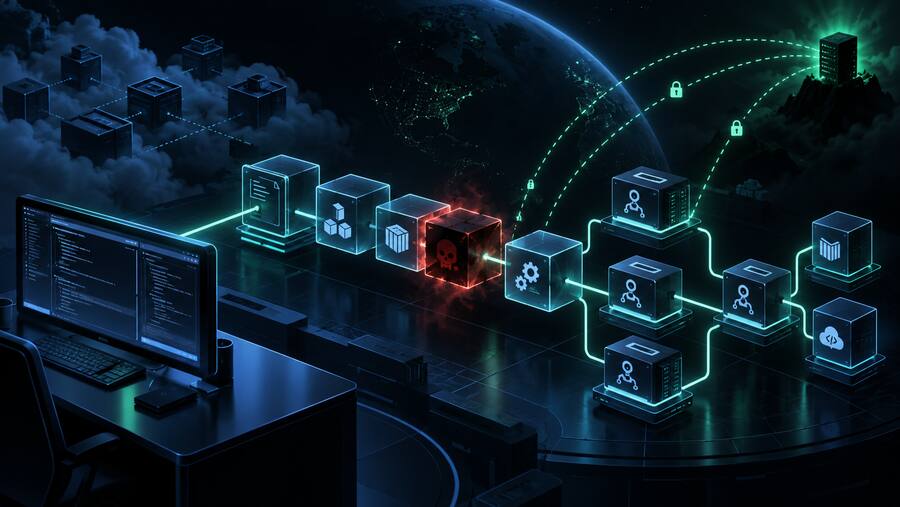











Backup infrastructure is supposed to be the system of record when everything else is burning. That is why active exploitation of AhsayCBS deserves more attention than a routine server-side bug.
BleepingComputer reported that threat actors are exploiting vulnerabilities in the AhsayCBS backup management platform to deploy JSP webshells and XMRig cryptocurrency miners. The underlying research from Huntress is more concerning: exploitation was observed against exposed systems, and Huntress says the latest AhsayCBS 10.3.4 release is still affected despite earlier reporting that the issues were fixed.
What happened
AhsayCBS is a centralized backup-management console commonly used by managed service providers and system integrators. That role makes it a high-value target: compromise the backup controller and an attacker may gain a privileged foothold into systems that defenders depend on for recovery.
The observed attacks chain two vulnerabilities:
- CVE-2026-105133 — an authentication-bypass weakness.
- CVE-2026-105134 — a critical command-injection / unauthenticated remote-code-execution path in the replication-receiver functionality.
After gaining code execution, the actor deployed JSP webshells, ran reconnaissance, downloaded payloads from attacker-controlled infrastructure, and launched XMRig under names designed to blend into a Windows host. Huntress also observed a fake-looking Microsoft Edge update service, a renamed NSSM service wrapper, and a PowerShell script that hides mining activity when Task Manager is opened.
That last detail matters. This is not just opportunistic coin-mining noise. The tradecraft includes persistence, masquerading, anti-analysis behavior, and in at least one case use of the vulnerable WinRing0 driver to support the mining operation. Even if the visible payload is “only” a miner, the initial access method and webshell behavior should be treated as full server compromise.
Why this matters for SMBs and government contractors
Many smaller organizations outsource backup operations to MSPs, resellers, and integrators. That creates a trust path: a backup platform may sit close to production systems, hold credentials, maintain broad network reach, or contain enough operational context to help an attacker plan the next move.
For government contractors, the risk is bigger than compute theft. Backup systems may store controlled data, contract records, endpoint images, configuration files, identity artifacts, and disaster-recovery material. A compromised backup-management host can become a staging point for ransomware, data theft, recovery sabotage, or downstream customer compromise.
The uncomfortable lesson is simple: backup tools are security-critical infrastructure. They should not be treated like ordinary admin panels exposed for convenience.
Defensive priorities
1. Remove direct internet exposure
If AhsayCBS management is reachable from the public internet, reduce that exposure immediately. Put management access behind a VPN, private access broker, or tightly scoped allowlist. Do not rely on the application login screen as the control boundary when authentication bypass and command execution are in play.
2. Treat exposed servers as potentially compromised
If the console was internet-facing during the exploitation window, do more than check whether the miner is running. Hunt for webshells, unexpected child processes from AhsayCBS service binaries, new services, suspicious files in Temp paths, curl or certutil downloads, and outbound connections to mining pools or unfamiliar infrastructure.
3. Preserve logs before rebuilding
Before wiping a host, preserve application logs, Windows event logs, process telemetry, web server artifacts, service creation records, and EDR timelines. If this server touches customer backups or production credentials, the scope question matters as much as the cleanup.
4. Rotate credentials that crossed the backup plane
Backup systems often store service accounts, repository credentials, cloud storage keys, administrative passwords, and API tokens. If compromise is confirmed, assume secrets accessible to the AhsayCBS host may be burned. Rotate them and review where those identities were used after the first suspicious activity.
5. Validate restore paths from trusted media
Huntress recommends full re-image from a trusted backup when indicators are found. That is the right instinct. But defenders should also validate that recovery points were not modified and that restoring from backup does not reintroduce attacker tooling.
Detection ideas
Defenders should prioritize telemetry around the backup-management service itself. Useful starting points include:
- AhsayCBS service processes spawning command shells, PowerShell, curl, certutil, or scripting engines.
- New JSP files or unexpected files in AhsayCBS web application directories.
- Services with names close to legitimate Microsoft Edge update services but executing from Temp or user profile paths.
- Processes named
edge.exeormsedge.exewith unusual original file names, paths, arguments, or parent processes. - PowerShell logic that watches for Task Manager and starts or stops services in response.
- WinRing0 driver downloads or loads on servers where hardware-monitoring tools are not expected.
- Outbound connections from backup servers to mining pools, newly observed cloud object storage endpoints, or non-standard ports.
Huntress also published Sigma rules and indicators for this campaign. Those should be pulled into the SIEM or detection engineering backlog, especially for MSPs and organizations running AhsayCBS for multiple customers.
Bulwark Black assessment
This incident is another reminder that “backup” does not automatically mean “safe.” Backup-management platforms deserve the same hardening as VPNs, firewalls, RMM tools, identity providers, and hypervisors because they operate at the intersection of privileged access, recovery control, and customer trust.
The most practical move right now is exposure reduction: find every AhsayCBS instance, determine whether it is reachable from the internet, restrict management access, and hunt for compromise. If the host shows signs of exploitation, treat it as a recovery and credential-containment event—not just a malware cleanup ticket.
Sources: BleepingComputer; Huntress.