








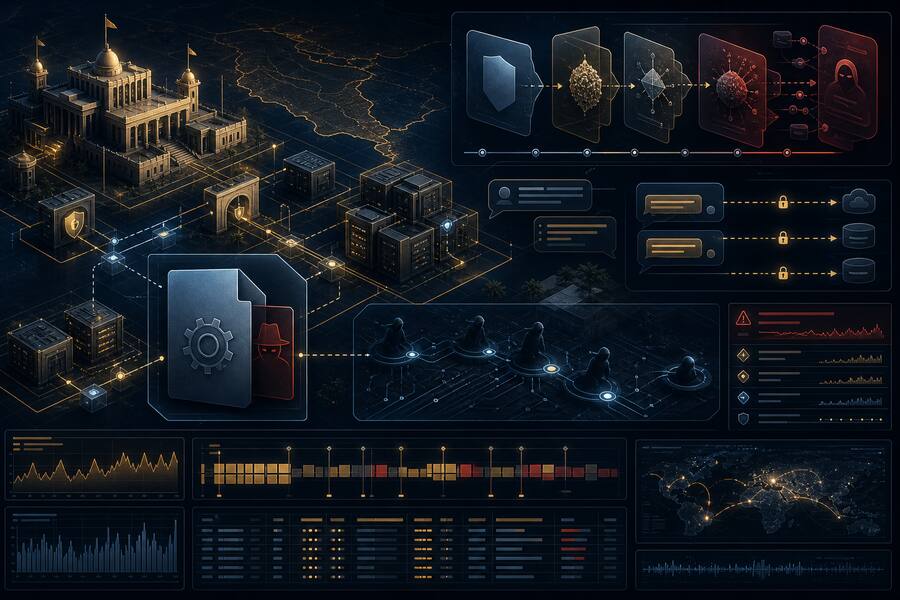





Group-IB’s latest reporting on JadeProx is a useful reminder that mature intrusions are often exposed by very ordinary mistakes. In this case, researchers found an operator-owned Alibaba Cloud staging server with directory listing enabled. That single operational security lapse exposed phishing packages, tooling, bash history, victim paths, and evidence tying multiple intrusion attempts to a shared loader Group-IB tracks as TriBack Loader.
The campaign matters because the target set was not random. Group-IB reported activity touching government, healthcare, and education environments in Vietnam, Malaysia, Hong Kong, Honduras, and Venezuela-themed infrastructure. For small businesses and government contractors, the bigger lesson is direct: China-nexus activity does not only target national agencies. It also follows the supporting ecosystem around public services, regional infrastructure, healthcare operations, academia, and vendors that may hold access, data, or trust relationships.
What Group-IB Reported
Group-IB says the exposed server revealed simultaneous activity against a Vietnamese public hospital’s medical imaging system, Malaysia’s Ministry of Foreign Affairs, Hong Kong education-related infrastructure, and Latin America-focused phishing. The common thread was TriBack Loader, a Windows loader using DLL sideloading to execute encrypted shellcode payloads.
The loader chain is built around legitimate signed binaries paired with malicious DLLs and encrypted companion files. That pattern gives defenders something practical to hunt: signed applications running from places they normally should not, especially user-writable folders, temporary paths, or Startup locations, with odd DLL and encrypted data files sitting nearby.
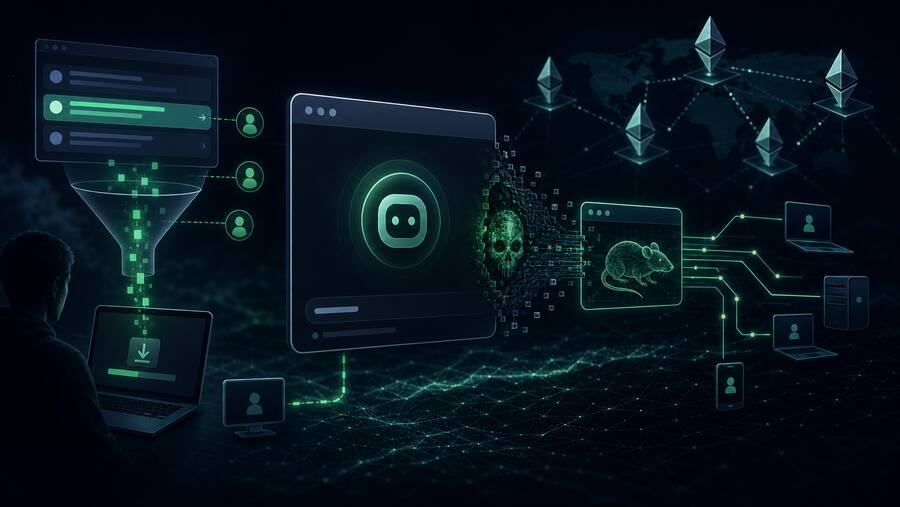
Group-IB also reported that two TriBack variants delivered AdaptixC2, while another Claude-themed infection path delivered Beagle, a backdoor previously documented by Sophos. The campaign also included credential-harvesting portals and infrastructure impersonating trusted brands or services.
Why This Matters for SMBs and Government Contractors
The high-end part of this story is the custom loader and post-exploitation tooling. The low-end part is just as important: exposed management interfaces, old critical vulnerabilities, phishing lures, cloud-hosted staging, and weak visibility around suspicious process execution. That combination is exactly where smaller organizations tend to get hurt.
Government contractors should read JadeProx as a warning about trust-path targeting. If an adversary wants insight into a ministry, healthcare program, education partner, or public-sector project, the easiest path may be through the contractor, software vendor, local service provider, or unmanaged edge system connected to that mission.
Defensive Takeaways
- Hunt for DLL sideloading behavior. Look for signed binaries executing from unusual paths, especially alongside unexpected DLLs such as hostfxr.dll, avk.dll, MpClient.dll, encrypted .dat/.log files, nested staging folders, or cleanup scripts.
- Inventory internet-facing Java and legacy web systems. Group-IB placed public-facing Java applications and unpatched critical vulnerabilities high in the defensive priority list. Old 9.8-rated flaws are still viable intrusion paths.
- Watch for brand and software impersonation. Fake AI tooling, fake security-vendor update domains, and regional government-themed portals show how espionage campaigns blend malvertising, phishing, and infrastructure abuse.
- Log process ancestry, not just network connections. If a loader launches a trusted binary and executes shellcode indirectly, endpoint telemetry needs to preserve parent-child relationships, command lines, module loads, and file creation events.
- Treat contractor and partner access as mission access. For CMMC-aligned environments, this reinforces why asset inventory, vulnerability management, identity controls, and incident-response evidence retention are not paperwork exercises.
Bulwark Black Assessment
JadeProx is not just a malware story. It is a visibility story. The operators made a mistake by exposing their staging server, but defenders should not need an adversary error to notice the downstream activity. DLL sideloading from user-writable paths, old public-facing vulnerabilities, fake software installers, and unusual C2 tooling all create detection opportunities before data access becomes mission impact.
For SMBs and government contractors, the practical move is to tighten the basics around the systems adversaries actually touch first: exposed services, VPN and web application edges, endpoint execution paths, browser/download hygiene, and partner-facing identities. The campaign shows that sophisticated actors still rely on ordinary gaps once they reach the target environment.
Source: Group-IB — “JadeProx: Tracing a China-nexus Operation Through an OPSEC Mistake”.