


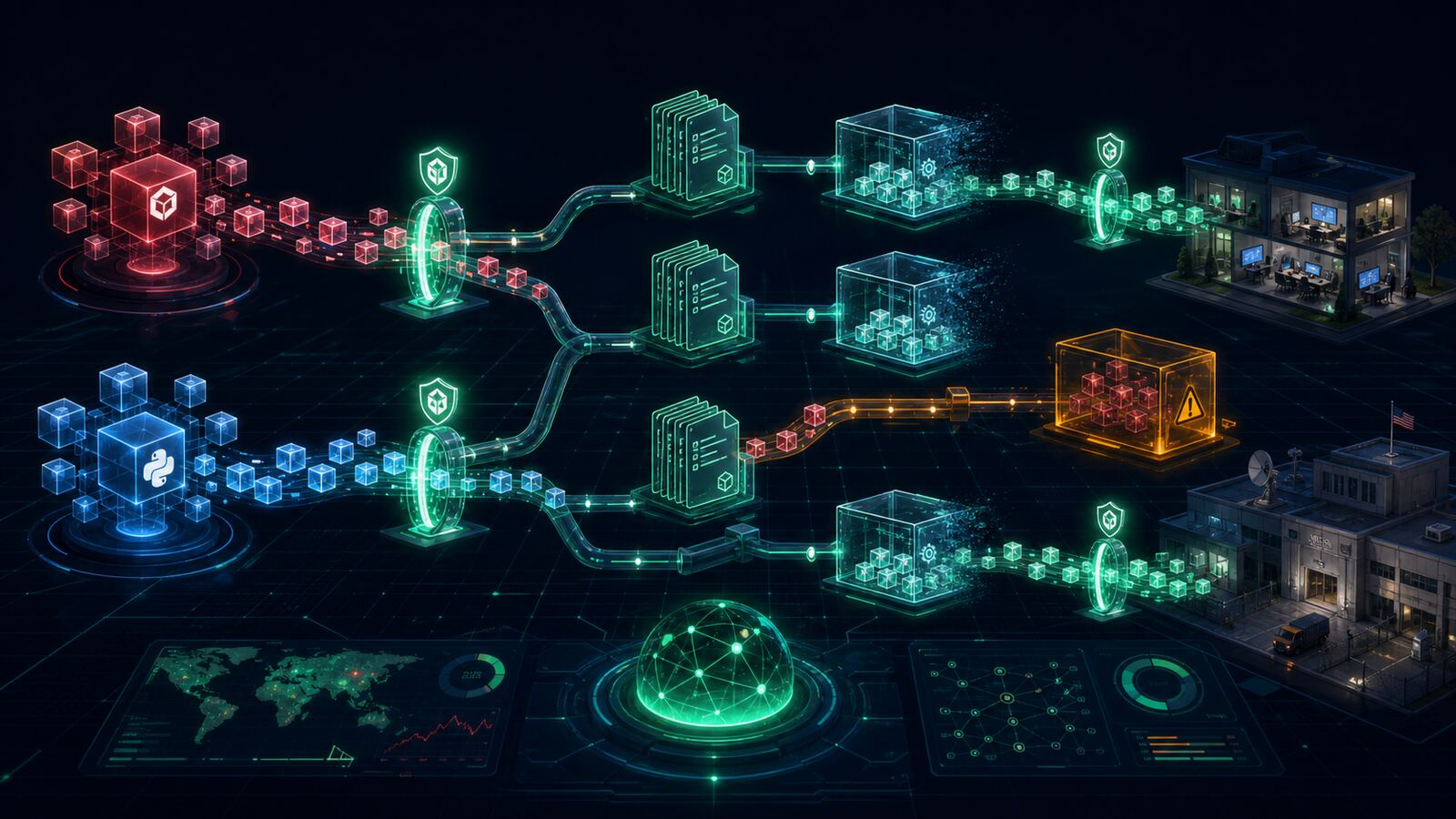
Google Threat Intelligence Group and Mandiant published new guidance on software supply chain compromise, and the important point is not just that malicious packages are increasing. The bigger operational lesson is that modern attackers are targeting the development pipeline as a system: repositories, package managers, CI/CD workflows, developer identities, build runners, and artifact storage.
That matters for small businesses and government contractors because many organizations now depend on the same open-source ecosystems, automation platforms, and third-party development utilities as much larger enterprises — but without the same depth of security engineering around the pipeline.
What Google reported
According to Google Threat Intelligence Group’s analysis, the most impactful supply chain incidents they tracked across 2025 and early 2026 increasingly involved open-source repositories, dependencies, and developer tools. GTIG highlighted large-scale activity across ecosystems such as npm, PyPI, and Docker Hub, including campaigns that abused GitHub Actions workflows, compromised maintainer accounts, and used malicious packages to steal credentials or pivot deeper into victim environments.
The report also warns that AI-assisted development can increase this risk. If teams allow coding agents, package suggestions, or rapid prototyping workflows to pull dependencies without review, malicious packages can move from “test code” into real environments faster than traditional approval processes can catch up.
The practical risk: the build pipeline becomes an access path
Supply chain compromise is often discussed as a dependency problem, but that framing is too narrow. A poisoned package is usually only the first move. The real impact comes when that package can read environment variables, steal repository tokens, reach cloud credentials, modify artifacts, or persist through CI/CD automation.
For a government contractor, this can create a direct path from a low-trust development dependency to sensitive customer data, proposal systems, cloud workloads, or software delivered to downstream clients. Even if the organization is small, its software and integrations may sit inside a larger mission or supplier network.
Defensive takeaways for SMBs and government contractors
- Put a cooling period on new packages. Do not automatically consume freshly published npm, PyPI, container, or GitHub Action releases. A 24-hour quarantine window can stop fast-moving package hijacks before they reach production.
- Route dependency downloads through controlled internal repositories. Developers should not pull production dependencies directly from public registries when an internal mirror, proxy, or approved artifact repository can enforce policy.
- Kill long-lived automation secrets. Replace static personal access tokens with short-lived workload identities, GitHub Apps, or OIDC-based cloud access wherever possible.
- Review privileged CI/CD triggers. GitHub Actions workflows such as
pull_request_targetcan be dangerous when they combine untrusted contributor input with repository secrets or write permissions. - Use ephemeral build runners. Runners should be destroyed after each job so a malicious build step cannot persist into the next pipeline run.
- Maintain an SBOM and an “action bill of materials.” Track not only software dependencies, but also the third-party actions, plugins, containers, and utilities that participate in the build process.
- Monitor pipeline behavior, not just source code. Alert on unusual network egress from build runners, unexpected secret access, new package-publishing events, and changes to release workflows.
Bulwark Black assessment
The organizations that handle this best will treat the software supply chain like identity infrastructure: every package, workflow, token, runner, and registry should have an owner, a trust level, and a revocation path. Dependency scanning still matters, but it is not enough by itself. The control plane around development is now part of the attack surface.
For smaller teams, the best first move is not a massive platform rebuild. Start with three controls that reduce blast radius quickly: enforce MFA and short-lived tokens for source control, add package quarantine for newly released dependencies, and isolate CI/CD runners from production secrets unless the job truly needs them.
Source: Google Threat Intelligence Group / Mandiant — Mitigation Guidance for Supply Chain Compromise