


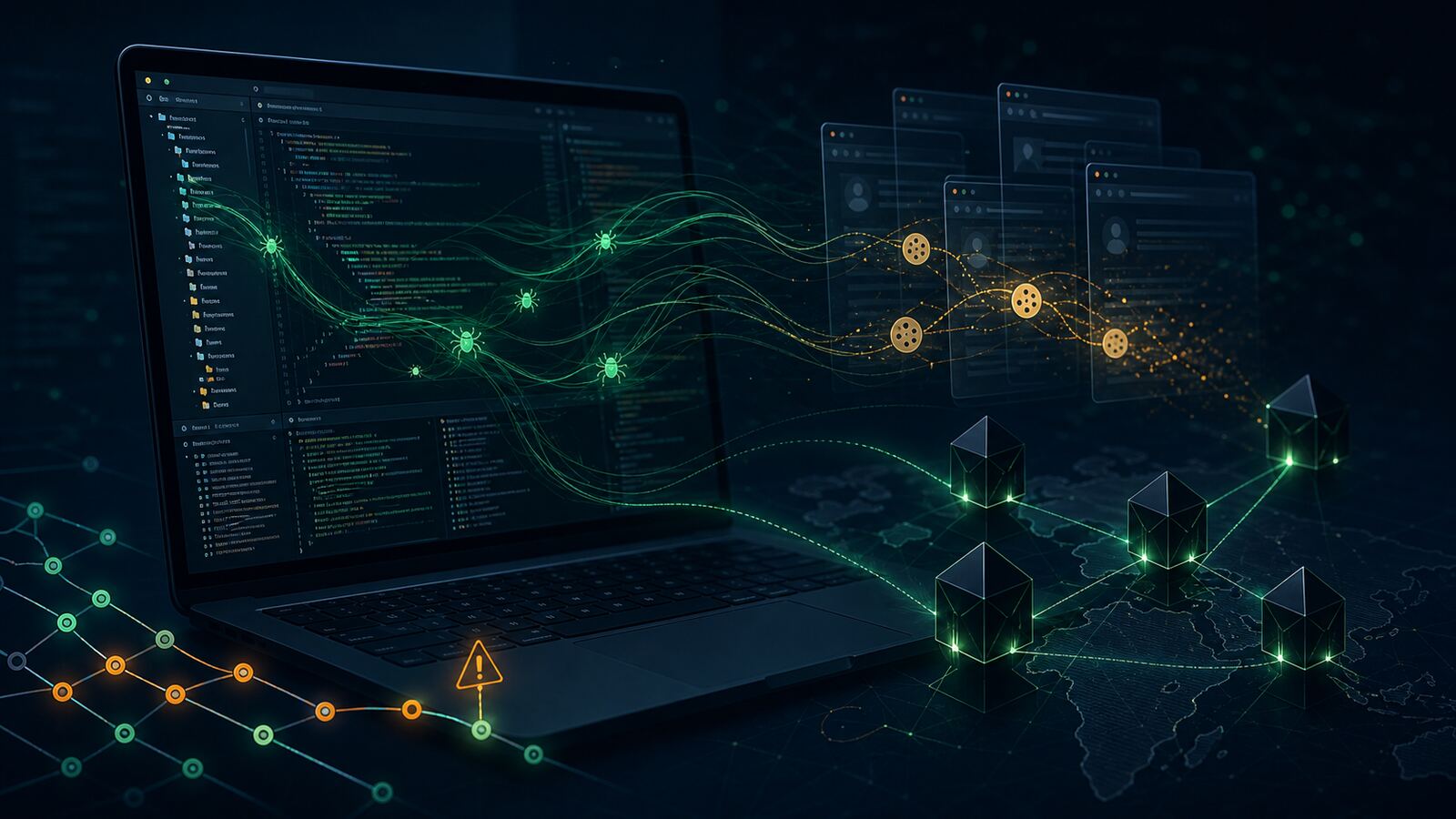
Unit 42 reports that XCSSET has returned with a significantly upgraded v40 variant targeting the macOS developer ecosystem. The campaign matters because the initial infection path is not a random consumer lure: the malware hides inside Xcode projects and vulnerable Git repositories, then executes when a developer builds the project locally.
That makes XCSSET v40 a software supply-chain problem as much as a macOS malware problem. A compromised developer workstation can become a bridge into code, credentials, browser sessions, messaging apps, and downstream projects that customers or teammates trust.
What Unit 42 Reported
According to Unit 42, XCSSET v40 has been active since at least April 2026, with a second wave in May expanding its operational modules. The malware injects downloader logic into benign Xcode projects and uses a multi-stage chain: initial C2 contact, host fingerprinting, a temporary staging applet, and then memory-resident core module execution.
Once the core module is running, it removes installation artifacts and loads specialized modules into memory. Unit 42 identified 17 modules, including capabilities for browser hijacking, credential theft, clipboard monitoring, data exfiltration, Chrome DevTools Protocol abuse, and a Telegram Desktop trojanizer.
The most important defender takeaway is not just that XCSSET is back. It is that the operators are reducing disk footprint, rotating payload fingerprints, and using legitimate developer and browser workflows as cover.
Why This Hits SMBs and Gov Contractors
Small businesses and government contractors increasingly rely on a handful of developer laptops, outsourced dev teams, open-source dependencies, and browser-based SaaS administration. XCSSET v40 is built for that reality. It does not need to attack a production server first if it can compromise the person who builds, signs, deploys, or administers the software.
For a defense industrial base supplier, veteran-owned contractor, MSP, or small software shop, the risk is straightforward: one infected Xcode project can turn into stolen browser tokens, compromised Git credentials, poisoned repositories, hijacked messaging apps, and follow-on access to cloud or customer environments.
Key Defensive Lessons
- Treat developer workstations as high-value assets. Developer laptops should receive the same monitoring priority as servers because they hold code, tokens, certificates, and privileged SaaS sessions.
- Audit Xcode projects before building. Review project files, build phases, scripts, hooks, and unexpected downloader logic before opening or compiling unfamiliar repositories.
- Harden Git workflows. Watch for malicious hooks, unexplained project file changes, newly added shell scripts, and suspicious build-time network calls.
- Monitor browser launch arguments. XCSSET v40’s Chrome hijacking module abuses Chrome DevTools Protocol exposure. Alert on browsers launched with remote debugging ports or unusual wrapper scripts.
- Protect browser sessions like credentials. Session tokens, autofill data, and extension contexts can be as damaging as passwords. Use phishing-resistant MFA, device posture checks, and conditional access where available.
- Watch macOS persistence locations. Include LaunchAgents, LaunchDaemons, Git hooks, trojanized apps, suspicious
defaultswrites, AppleEvents/TCC resets, and unexpected osascript activity in detections. - Do not rely only on file hashes. Unit 42 observed polymorphic payload generation and rotating encrypted blobs. Behavioral detections will age better than static indicators alone.
Practical Hunt Ideas
Defenders should look for build processes that initiate outbound network connections, AppleScript execution tied to developer tools, Chrome launched with remote debugging enabled, and unexpected modifications to Telegram or browser application bundles. On macOS fleets, also review attempts to disable update channels, interfere with XProtect-related files, reset TCC permissions, or terminate telemetry-related processes.
For organizations without a mature macOS EDR program, start with the basics: inventory developer devices, enforce patching, require least-privilege admin access, separate personal browsing from development work, and rotate tokens after any suspicious build event.
Bulwark Black Assessment
XCSSET v40 is a reminder that developer security is no longer a niche engineering concern. The attacker’s path runs through the trusted places defenders often under-monitor: local builds, browser sessions, messaging apps, Git workflows, and developer convenience features.
The proper response is not panic-cleaning every Mac. It is to make developer endpoints part of the security boundary. If a workstation can push code, access customer environments, administer cloud resources, or hold production secrets, it deserves explicit hardening, logging, and response playbooks.
Original source: Unit 42 — The Xcode Assassin Returns: A Deep Dive Into the Latest XCSSET Version.