











Cisco Talos’ latest analysis on agentic attacks is useful because it avoids the hype trap. The point is not that artificial intelligence magically changes every part of cybersecurity. The point is simpler and more operational: attackers can now use autonomous or semi-autonomous agents to test more paths, generate more attempts, adapt faster, and keep pressure on a target without getting tired.
For small businesses, MSPs, SaaS teams, and government contractors, that changes the economics of defense. A control that used to be “good enough” against occasional manual probing may fail when the same weakness can be tested thousands of times, across email, web applications, identity flows, exposed infrastructure, and employee-facing workflows.
Talos frames this as preparation for agentic threats: not a future science-fiction problem, but an emerging operating model where AI-assisted activity can compress reconnaissance, infrastructure setup, phishing variation, exploit testing, and social engineering into much shorter cycles.
What Talos is warning about
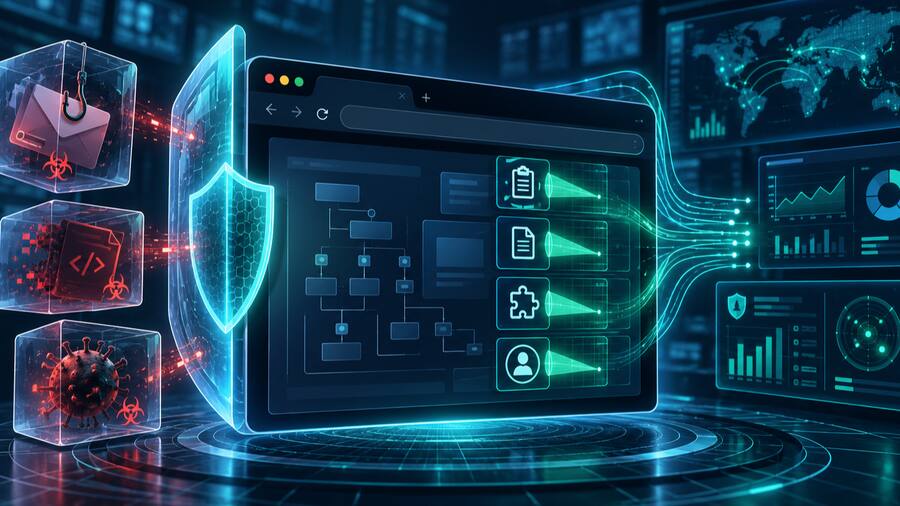
Talos argues that defenders should assume AI-enabled attack activity will move from loud, high-volume probing toward more capable and quieter operations over time. Early agent-driven incidents may look like noisy penetration tests: mass requests, obvious automation, unusual user agents, repeated form submissions, and bursts of scanning. That noise is still useful if defenders are watching for it.
The bigger concern is what happens as agentic systems get better at choosing paths, coordinating actions, and reducing obvious signals. A human operator no longer has to manually test every idea. Agents can help brainstorm, probe, compare results, build plausible lures, rotate infrastructure, and keep trying variations until something works.
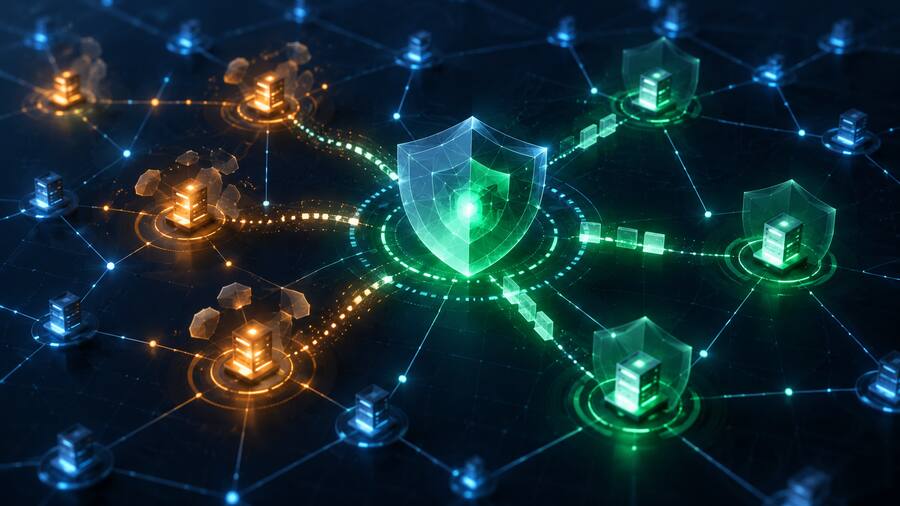
That means the defender’s goal is not only to block one exploit or one phishing email. It is to make every stage of the attack more expensive: more time, more compute, more tokens, more infrastructure, more failed attempts, and more chances to trigger detection.
Source: Cisco Talos — One breach, please, and make no mistakes.
Why this matters for SMBs and government contractors
Smaller organizations often have a dangerous mix of real business exposure and thin security coverage. They may use the same Microsoft 365 tenant for executive email, contracts, file storage, finance workflows, and customer communications. They may have one VPN, one firewall, one outsourced help desk, one remote monitoring tool, and a handful of SaaS applications that hold most of the operational risk.
That concentration is exactly what agentic attackers can exploit. If one credential works, one help-desk reset process is weak, one legacy application has poor logging, or one exposed service can be probed without throttling, an automated campaign can keep applying pressure until it finds the soft path.
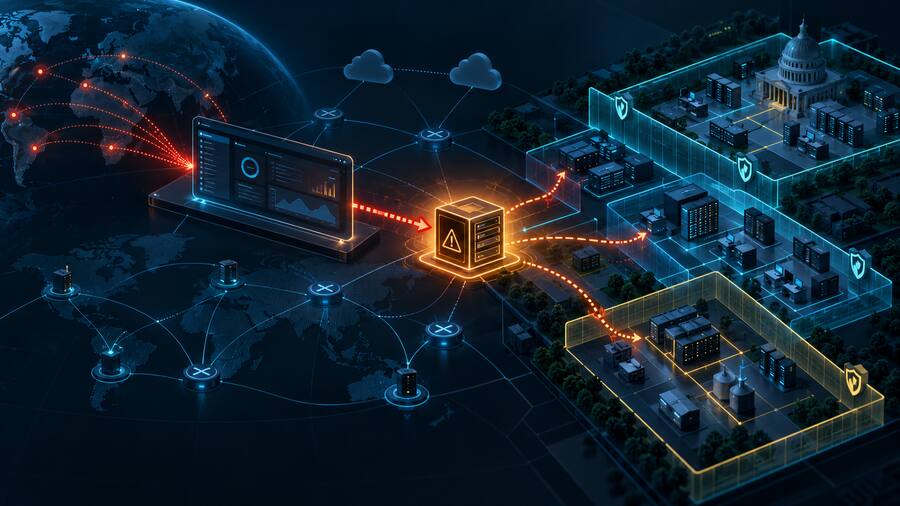
Government contractors also have compliance and customer-trust implications. A compromise that starts as commodity probing can quickly become a reportable incident if it touches controlled unclassified information, contract data, government customer communications, subcontractor records, or privileged access into a customer environment.
The defensive lesson: raise the cost of every step
The practical response is not to buy an “AI security” product and call it done. The better move is to pressure-test the basics against faster, more persistent, more adaptive attack behavior.
- Rehearse incident response with named owners. An incident response plan that nobody has practiced will fail under agent-speed pressure. Define who can isolate accounts, disable integrations, block traffic, contact legal, notify leadership, and communicate out-of-band if email or chat is compromised.
- Map real attack paths, not just assets. Start with exposed services, identity providers, VPNs, remote support tools, SaaS admin portals, source control, CI/CD systems, and finance workflows. Ask what an attacker can reach after the first foothold.
- Harden identity beyond the VPN. Phishing-resistant MFA, conditional access, privileged access separation, device compliance, and monitored admin actions matter more when attackers can automate password spraying, prompt bombing, device-code phishing, and help-desk impersonation.
- Instrument east-west movement. North-south perimeter logs are not enough. Watch internal authentication, DNS, unusual PowerShell or scripting, remote admin tools, service account use, and new connections between systems that normally do not talk.
- Throttle and alert on automation. Spikes in failed logins, WAF alerts, SQL injection attempts, unusual registration attempts, suspicious API usage, and curl/Python-style traffic can be early warning signs before the operation becomes quiet.
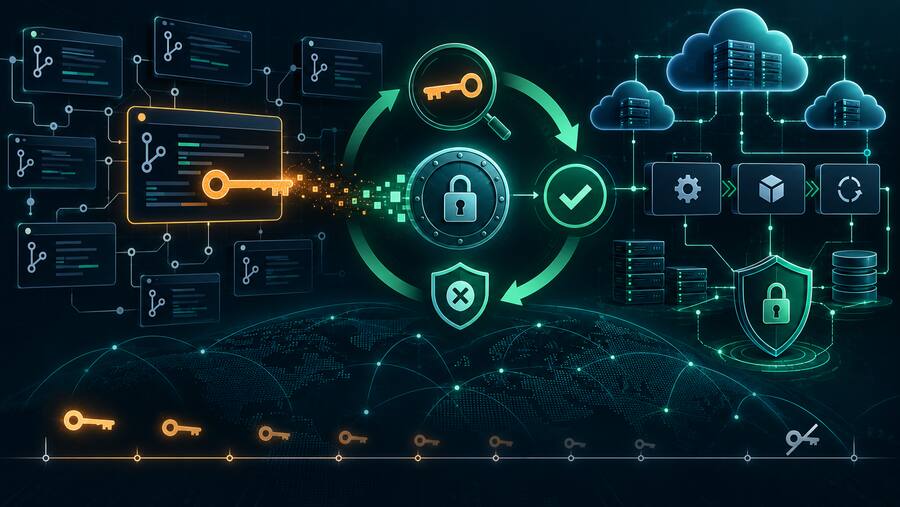
- Inventory AI tools with access to data. AI assistants, coding agents, browser extensions, workflow bots, and SaaS automations can become part of the attack surface if they have broad permissions or weak review around plugins, skills, connectors, and tokens.
Tabletop scenarios worth running now
Generic ransomware tabletops are still useful, but they do not fully test the agentic angle. Security and operations teams should add scenarios like these:
- An automated campaign is probing web apps, password reset flows, and public employee profiles at the same time.
- A fake new-hire or vendor onboarding request is supported by convincing AI-generated messages, documents, and social profiles.
- A compromised AI coding assistant or automation token has access to source repositories, cloud credentials, or internal documentation.
- A swarm of agents is generating high-volume WAF alerts while a quieter identity attack is happening in parallel.
- An attacker has one valid credential and is attempting to move through SaaS, VPN, RMM, and internal admin portals.
The point of these exercises is to expose decision gaps before a real incident does. Who can shut down a workflow? Who can revoke tokens across SaaS platforms? Who can freeze a suspicious vendor payment? Who can validate whether an employee request is real without using the same compromised channel?
Bulwark Black assessment
Agentic attacks do not erase security fundamentals. They punish organizations that only implemented those fundamentals at the edge or on paper.
The right strategy is to make compromise expensive. Reduce exposed paths, enforce phishing-resistant identity controls, monitor internal movement, rehearse fast containment, and make sure every critical workflow has a human-verifiable fallback. If attackers can use agents to lower their cost per attempt, defenders need to raise the cost per successful step.
That is the useful framing: not panic over AI, but disciplined security architecture built for adversaries that can probe longer, faster, and with less human effort than yesterday’s attackers.
Original source: Cisco Talos — One breach, please, and make no mistakes