














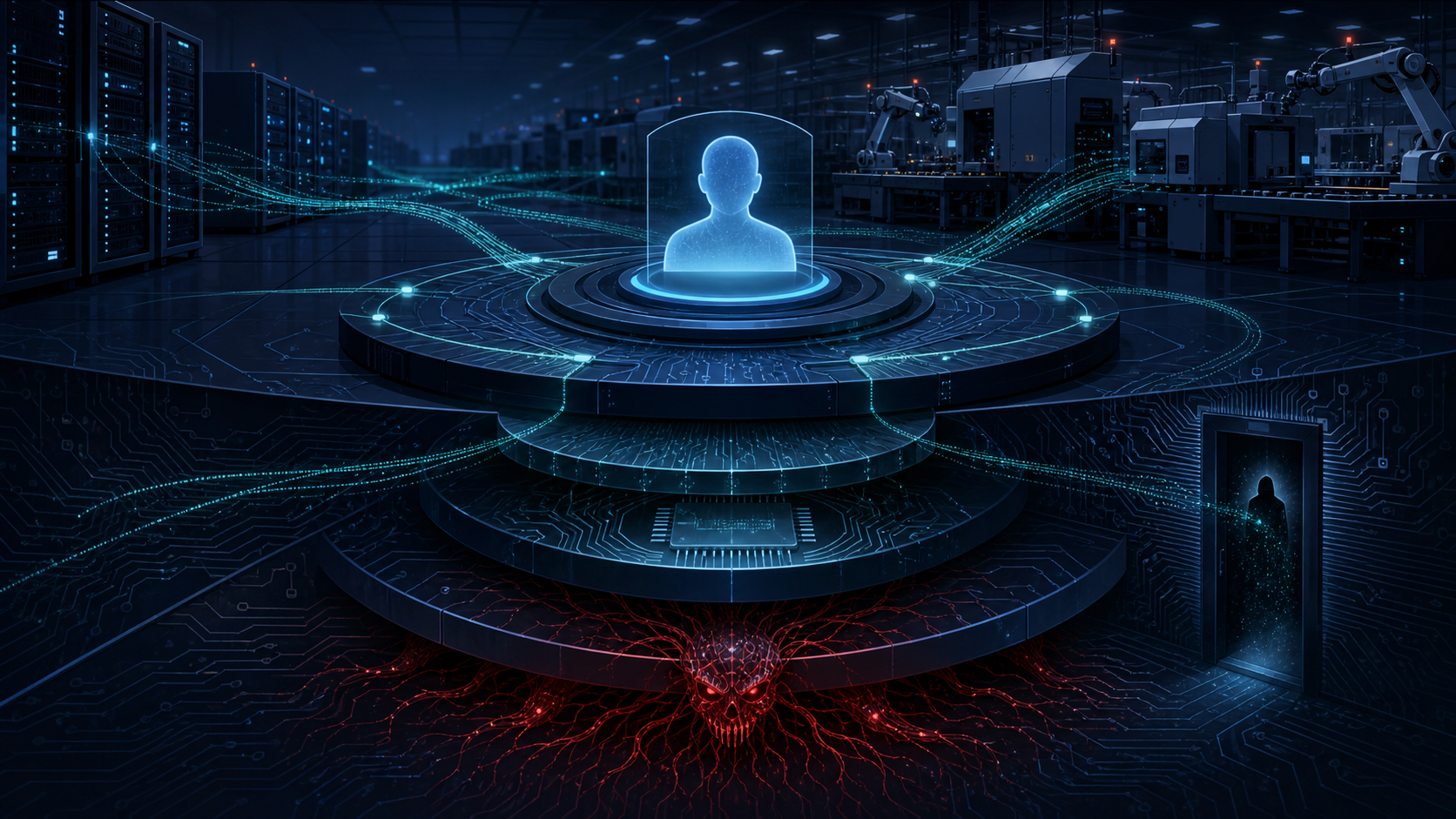
Symantec and Carbon Black’s Threat Hunter Team reported that Backdoor.Daxin, a China-linked kernel-mode rootkit first exposed in 2022, is still active. The latest finding matters because Daxin was discovered on a compromised host inside a Taiwan-based subsidiary of a multinational high-tech manufacturer in 2026, alongside a previously undocumented backdoor called Backdoor.Stupig.
This is not a noisy commodity-malware story. It is a persistence story. The reporting suggests an actor with patience, technical depth, and enough operational discipline to hide inside a strategic manufacturing environment for a potentially very long time.
What was reported
Daxin is a Windows kernel-mode driver backdoor known for a command-and-control design that avoids the normal “beacon out to attacker infrastructure” pattern. Instead, it monitors inbound TCP traffic for specific patterns and hijacks legitimate connections to carry encrypted C2 traffic. That design makes the implant harder to spot with conventional network monitoring because the traffic can blend into existing sessions instead of creating obvious outbound callbacks.
The same host also contained Stupig, a newly documented backdoor that abuses the Windows logon path. Symantec described Stupig as a trojanized keyboard-layout DLL loaded by winlogon.exe. Once loaded, it can watch for a specially crafted username at the Windows logon screen and execute commands with SYSTEM privileges before a normal user signs in.
The co-location of Daxin and Stupig does not prove both tools came from the same operator, but the overlap is difficult to ignore: same host, complementary functions, similar development practices, and compile timestamps from early 2013. The victim system only became visible to telemetry in May 2026, which raises the uncomfortable possibility that the intrusion may have persisted for years.
Why this matters for manufacturers and contractors
For high-tech manufacturing, defense-adjacent suppliers, and government contractors, the key lesson is not just “China-linked malware exists.” The sharper point is that advanced operators are willing to treat identity infrastructure, legacy middleware, and endpoint blind spots as long-term access platforms.
Symantec identified an outdated Digiwin single sign-on portal using end-of-life Java Development Kit versions as the likely initial access path. That should sound familiar to any organization with older business systems that quietly became critical infrastructure: the portal nobody wants to touch, the vendor application with fragile dependencies, the authentication system that still works so it never gets funded for replacement.
Those systems are attractive because they sit at the intersection of trust and neglect. If an attacker can use them to reach a strategic environment, the rest of the operation can become slow, quiet, and highly selective.
Defensive takeaways
- Hunt beyond normal outbound beaconing. Daxin’s value is stealthy C2 over legitimate-looking inbound TCP flows. Network teams should not rely only on new outbound destinations or obvious periodic beacons.
- Baseline kernel drivers and Windows system directories. Watch for unexpected drivers under
%SystemRoot%\System32\driversand suspicious DLLs that visually mimic legitimate Windows files, such as keyboard-layout libraries. - Monitor Winlogon-adjacent persistence. Stupig’s technique shows that pre-login execution paths deserve attention. Review registry locations tied to Winlogon helper behavior, keyboard layouts, authentication packages, and credential-handling components.
- Treat failed logons with strange usernames as signal. A failed logon may look boring by itself. In this case, the trigger pattern relies on an unusual username prefix. Identity telemetry should be reviewed for improbable usernames, especially on servers and privileged workstations.
- Inventory legacy authentication portals. End-of-life Java, old SSO components, and vendor-managed middleware should be tracked as business risk, not just technical debt.
- Assume old implants can still be live. “No public reporting since 2022” does not mean “inactive.” Mature espionage tooling often disappears because it is working, not because it is gone.
Bulwark Black assessment
Daxin and Stupig are a reminder that the hardest compromises to defend against are not always the fastest. A patient actor does not need to smash the front door every week if they already have a reliable way back in. That is especially dangerous in manufacturing and contractor environments where identity systems, engineering workstations, and legacy vendor applications can remain operational for years without deep visibility.
The proper defensive move is layered: reduce exposed legacy access paths, improve driver and DLL integrity monitoring, collect identity telemetry that catches odd pre-login behavior, and keep long-retention logs where strategic systems are involved. For small and midsize organizations, the goal is not to copy a Fortune 100 threat-hunting program overnight. The goal is to know which systems would give an adversary durable access, then monitor and harden those systems first.
If your environment includes older SSO portals, specialized manufacturing applications, or Windows systems that rarely get rebuilt, this is the time to ask a blunt question: would you know if a 2013-era implant was still living there?