

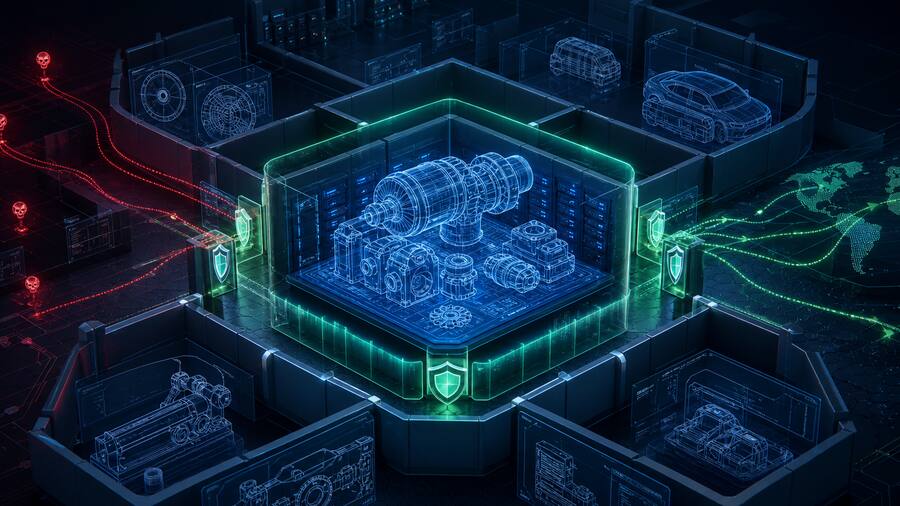









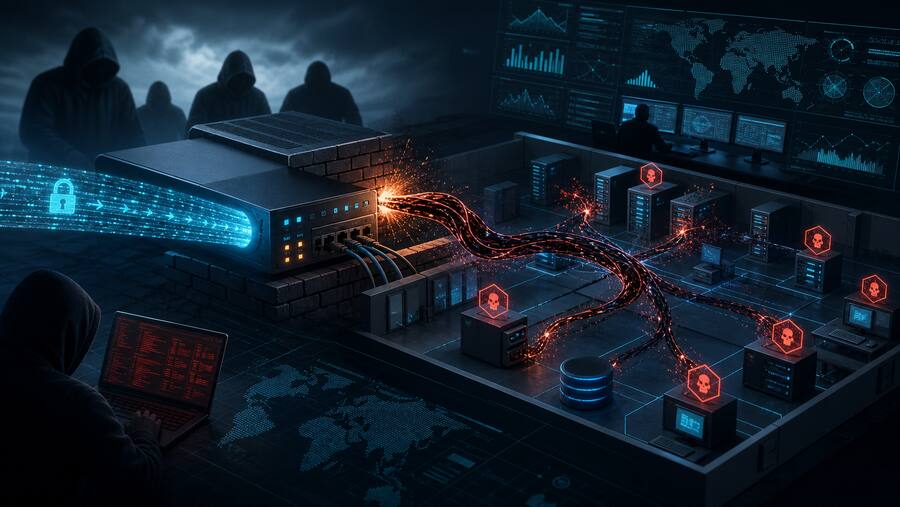


Cl0p’s latest activity is a reminder that ransomware crews are no longer limited to encrypting ordinary file shares and demanding payment. The more mature groups are hunting for business systems that contain the data a company cannot easily replace: engineering drawings, product designs, bills of material, supplier details, manufacturing context, and intellectual property that took years to build.
That is why the active exploitation of PTC Windchill and FlexPLM matters. These platforms sit close to product lifecycle management, engineering collaboration, retail and apparel design workflows, aerospace programs, automotive supply chains, and manufacturing operations. When an exposed PLM system is compromised, the risk is not only an IT incident. It can become a product strategy, supply chain, export control, customer trust, and competitive intelligence problem.
What happened
GBHackers reported that Cl0p ransomware affiliates are actively exploiting internet-facing PTC Windchill and FlexPLM deployments in a global data-theft and extortion campaign. The activity centers on CVE-2026-12569, a critical vulnerability in Windchill PDMLink and FlexPLM that CISA added to its Known Exploited Vulnerabilities catalog on June 25, 2026. CISA describes the issue as allowing an unauthenticated remote attacker to execute arbitrary code by sending a malicious network request, and marks ransomware campaign use as known.
PTC’s own advisory confirms that the vulnerability requires immediate action and that security patches are available for affected Windchill and FlexPLM versions. PTC has also published indicators of compromise and detection guidance, including suspicious JSP webshell paths under the Windchill login directory, a malicious request header, command-and-control IP addresses, and artifacts associated with file enumeration activity.
According to the reporting, attackers have used the access to enumerate files, stage data, and exfiltrate sensitive engineering and product design information. Observed post-exploitation indicators include filesystem listing artifacts such as flst.txt, suspicious POST traffic to hex-named JSP files under /Windchill/login/, and a custom X-windchill-req header that PTC says has no legitimate Windchill use. The campaign also reportedly includes extortion emails sent to employees at targeted organizations, claiming that Windchill systems were breached and attempting to pressure victims before public leak-site listings appear.
The affected sectors are exactly the ones where PLM data is most valuable: manufacturing, automotive, aerospace, and retail/apparel. For an attacker like Cl0p, that is the point. The prize is not just a database dump. It is pre-release product data, design decisions, supplier relationships, project structures, and technical files that can be used for extortion, resale, competitive damage, or follow-on attacks.
Why this matters for SMBs and government contractors
Many smaller manufacturers, engineering firms, component suppliers, and government contractors do not think of PLM as high-risk internet-facing infrastructure. They may treat it as a specialized business application owned by engineering or product teams rather than as a critical system requiring the same exposure management as VPNs, identity providers, email gateways, or ERP platforms.
That gap is dangerous. PLM platforms often connect people, drawings, product records, workflows, supplier documents, change notices, and approval chains. In defense, aerospace, energy, transportation, medical device, and advanced manufacturing environments, those records can include regulated technical data, controlled unclassified information, proprietary designs, or customer-sensitive project information. If a contractor handles CUI, export-controlled technical data, or subcontractor deliverables, a PLM compromise can quickly become a compliance, notification, and contract-performance issue.
The second problem is exposure. Business applications that were originally intended for trusted internal collaboration often become reachable through partner portals, remote work exceptions, legacy integrations, reverse proxies, or temporary firewall changes that never get removed. Attackers do not care whether the exposure was deliberate. If the login endpoint is reachable and the system is unpatched, it becomes part of the attack surface.
The third problem is incident scope. A compromised PLM system is rarely isolated to one server. It may hold service credentials, connect to file stores, integrate with ERP or CAD systems, and contain references to suppliers and customers. That means responders need to think beyond “patch the CVE.” They need to determine whether attackers accessed engineering files, staged archives, dumped credentials, added webshells, touched connected repositories, or used the system as a stepping stone into adjacent environments.
Defensive priorities
- Patch immediately. Apply PTC’s current Windchill and FlexPLM security patches and confirm the actual running version after maintenance windows complete.
- Remove unnecessary internet exposure. Windchill and FlexPLM access should be behind VPN, SSO, conditional access, reverse proxy controls, or tightly scoped partner access. Public login endpoints deserve urgent review.
- Hunt back to early June 2026. Do not assume compromise started when the alert became public. Review web, application, EDR, WAF, proxy, and file integrity logs retrospectively.
- Search for webshell indicators. Look for unexpected JSP files under Windchill login/codebase paths, especially hex-named filenames, POST requests to
/Windchill/login/*.jsp, and any request containingX-windchill-req. - Check for data staging and enumeration. Investigate
flst.txt, abnormal archive creation, large outbound transfers, multi-megabyte POST responses from JSP paths, unusual compression utilities, and access to high-value product folders. - Block and monitor known infrastructure. Use PTC’s latest IOC list, but treat it as a starting point. Cl0p infrastructure can change quickly.
- Rotate secrets if compromise is suspected. Include application accounts, database credentials, service accounts, SSO integrations, API tokens, and any credentials stored in scripts or configuration files reachable from the PLM tier.
- Preserve evidence before cleanup. If indicators appear, snapshot systems, retain logs, and coordinate legal/IR decisions before rebuilding or deleting artifacts.
Bulwark Black assessment
This is the kind of campaign that should change how organizations rank “business application” risk. A Windchill or FlexPLM server may not look like a classic edge appliance, but in practice it can be just as sensitive as a VPN concentrator or email system. If it is internet-facing, unpatched, and connected to valuable data, it is an edge asset.
Cl0p has repeatedly shown a preference for scalable data-theft opportunities where one exploit chain can produce many extortion targets. The group does not need to encrypt every endpoint if it can steal the data that leadership, legal, customers, suppliers, and regulators care about most. PLM data fits that model extremely well because it combines business value, operational context, and disclosure pressure.
For SMBs and government contractors, the immediate lesson is simple: inventory the systems that hold the data your business is built on, not just the systems your vulnerability scanner labels as “external.” Engineering repositories, product lifecycle tools, customer portals, ticketing systems, file transfer platforms, and vendor collaboration systems all deserve exposure review, patch discipline, logging, and tested incident response plans.
Organizations using Windchill or FlexPLM should treat this as an active exploitation event, not a routine advisory. Patch, remove exposure, hunt for compromise, and validate whether sensitive design or product data was accessed. If the environment supports government work, legal, contractual, and CUI handling obligations should be considered early, not after extortion emails arrive.
Sources: GBHackers, PTC Trust Center, CISA Known Exploited Vulnerabilities Catalog.