




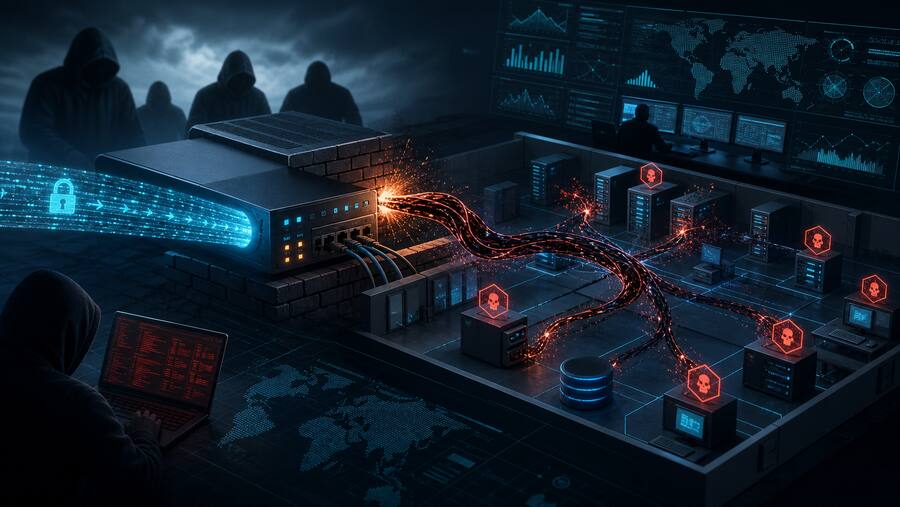
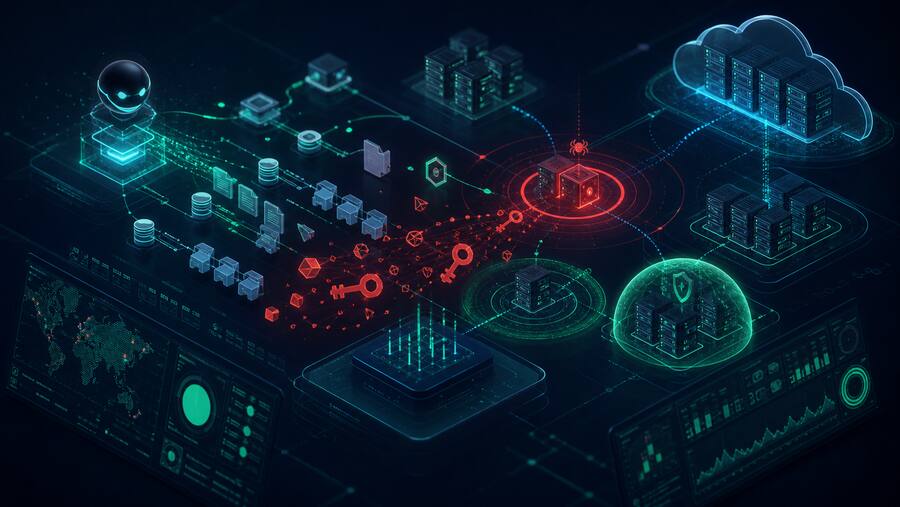

Origin Energy’s July 2026 data-security incident is a clean reminder that critical-infrastructure risk is not limited to turbines, substations, control networks, and field devices. Customer identity data, billing records, call-center workflows, and account-management systems are part of the operating environment too. When attackers gain access to that layer, the result may not be a power outage, but it can still create operational drag, regulatory exposure, fraud risk, and a long tail of social-engineering pressure against customers and staff.
Origin, one of Australia’s largest electricity and gas providers, confirmed unauthorized access and disclosure of some customer data after initially announcing an investigation on July 22, 2026. The company says it is still determining the total number of impacted customers and will contact affected individuals directly. SecurityWeek reported that a person claiming responsibility told Australian media they had stolen data tied to as many as two million customers and threatened to leak it unless a ransom was paid. Origin has not publicly validated that figure, and the company noted ongoing media speculation while the investigation continues.
What happened
According to Origin’s public update, affected data may include names, addresses, dates of birth, phone numbers, account information, and partial payment details such as the last four digits of a credit card or the last three digits of a bank account. Origin emphasized that incomplete card or bank information cannot be used by itself to make purchases or access accounts, but the risk does not end there. Partial payment details can still help attackers make scams sound credible, especially when combined with names, addresses, account context, and recent breach anxiety.
Origin says it has engaged independent cyber experts and is working with Australian government bodies, including the Australian Cyber Security Centre, the Australian Federal Police, and the Office of the Australian Information Commissioner. The company also said its priority is securing systems and preventing further unauthorized access. SecurityWeek reported that Origin had not indicated an impact to production or critical operations, which is an important distinction: this currently appears to be a customer-data incident rather than a confirmed OT disruption. Still, for an energy provider, customer-data compromise can become a public-trust and operational-resilience problem quickly.
The most likely immediate pressure will be support volume, customer-notification requirements, fraud monitoring, and attempted impersonation. Attackers do not need full bank-account numbers to exploit fear and confusion. They can call or text customers pretending to be the utility, cite partial personal details, and ask victims to “verify” payment information, reset passwords through malicious links, or move service accounts to attacker-controlled contact details. That is where a breach of administrative data becomes a phishing and account-takeover accelerator.
Why this matters for SMBs and government contractors
Many small and midsized businesses treat customer-data protection as a privacy function and infrastructure defense as a separate technical function. That separation is increasingly artificial. If a company supports utilities, local government, healthcare, logistics, energy services, or defense-adjacent customers, personal and account data can become targeting material. A vendor does not need to operate a control system to be useful to an attacker. Helpdesk records, invoices, account contacts, project rosters, portal credentials, and billing workflows can all support follow-on intrusion attempts.
For government contractors, this is especially relevant because adversaries often build believable pretexts from ordinary business records. A stolen customer list can reveal who buys services, which departments interact with vendors, which phone numbers get used for support, and which staff members may be susceptible to urgent “account validation” requests. Even when the breach happens outside the United States, the pattern is transferable: critical-infrastructure-adjacent organizations hold data that can bridge the gap between opportunistic cybercrime and targeted social engineering.
The Origin incident also highlights the response burden after a breach. Organizations must answer the same hard questions quickly: what data was accessed, which customers were affected, whether credentials or payment workflows were exposed, whether the attacker still has access, what regulators need to know, and how to communicate without giving scammers a better script. That is difficult under normal conditions and worse when the organization lacks clean asset inventory, centralized logs, tested notification playbooks, or a defined executive decision lane.
Defensive priorities
- Map customer-data stores before an incident. Know where identity, billing, support, and account-management data lives, who can access it, and which systems can export it in bulk.
- Watch for bulk access and unusual exports. Data theft often produces signals before public disclosure: abnormal queries, large downloads, new API tokens, suspicious admin sessions, or access outside normal geography and hours.
- Reduce helpdesk and account-takeover risk. Require strong identity proofing before changing account contact details, resetting passwords, or discussing billing information.
- Use phishing-resistant MFA for privileged and support roles. Customer-support portals, CRM platforms, billing tools, and cloud storage deserve the same attention as VPNs and firewalls.
- Prepare breach communications in advance. Customers should know what the organization will never ask for, where official updates will appear, and how to report suspicious contact.
- Segment customer-service platforms from core operations. A breach of CRM or billing infrastructure should not become a path into engineering, OT, finance, or privileged administration.
- Retain logs long enough to investigate. Breach scope depends on evidence. Short retention windows can turn a contained incident into months of uncertainty.
- Exercise third-party and regulator notification workflows. The first time legal, security, communications, and executives work through a breach should not be during the breach.
Bulwark Black assessment
This incident should be treated as a high-severity customer-data breach because it involves a major energy provider and potentially large-scale exposure, even though no production outage or OT impact has been publicly confirmed. The immediate harm is likely fraud, impersonation, account abuse, and customer-support overload. The broader lesson is that critical-infrastructure organizations carry two kinds of trust: trust that services will keep running and trust that customers’ information will not become attack fuel. Both matter.
For SMBs and government contractors, the practical takeaway is simple: if your business holds operationally useful data, you are part of someone’s attack surface. Do not wait for a ransomware note or public leak claim to figure out where sensitive customer data lives, who can export it, and how quickly you can prove what happened. The best breach response starts months earlier with boring controls: least privilege, logging, MFA, export monitoring, tested communications, and clean ownership of customer-facing systems.
Origin’s public guidance to customers is also worth repeating in principle: be alert for suspicious messages, do not provide passwords or account details in response to unsolicited contact, reset account passwords where appropriate, and use two-step authentication where available. Those same points apply to any organization caught in the blast radius of a data breach. Once personal context is exposed, the second wave is almost always social engineering.
Sources: Origin Energy customer data security incident update; SecurityWeek reporting on the Origin Energy breach.