


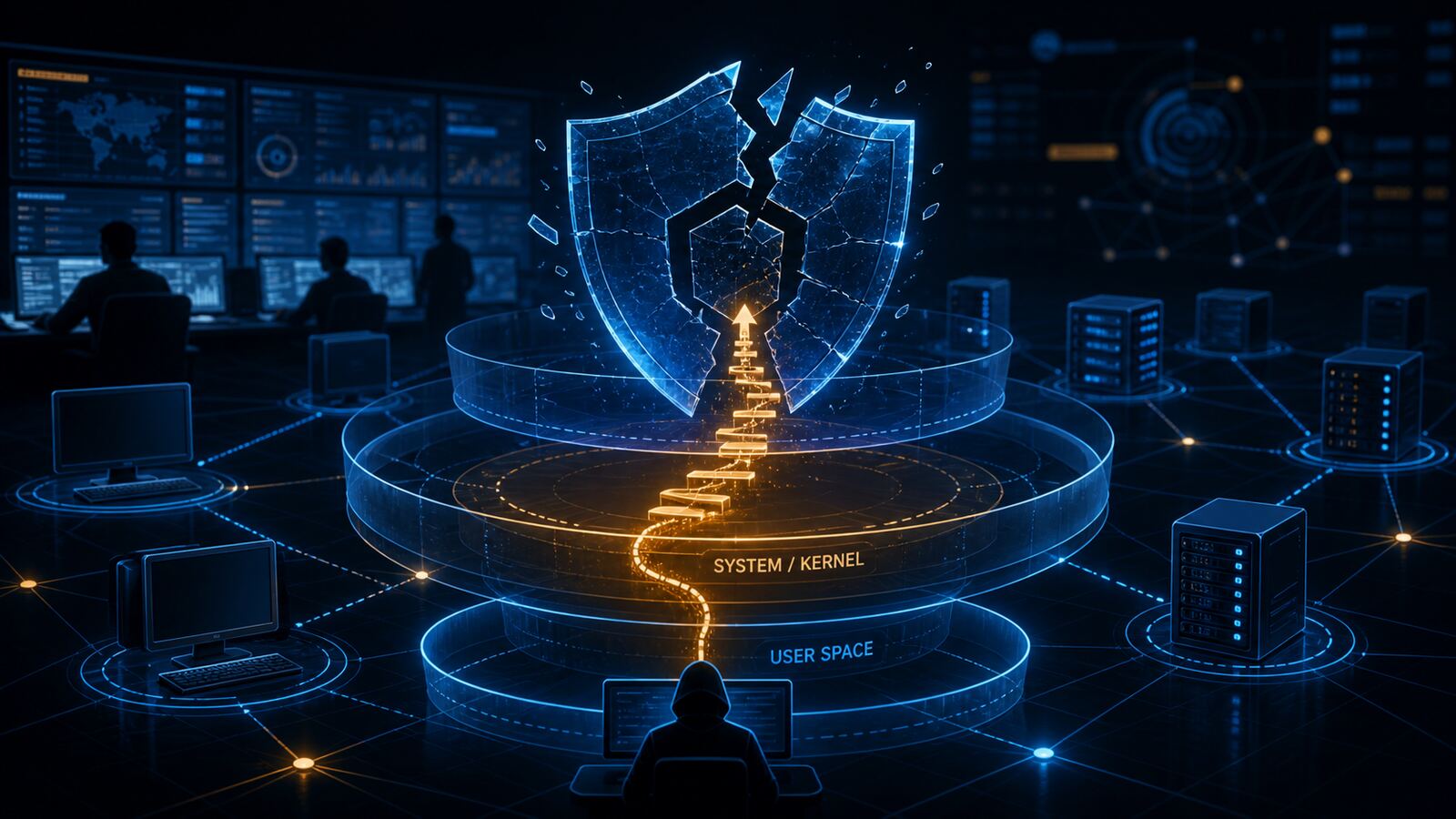
Source: Qualys: CVE-2026-69414 ShieldBreak Zero-Day. Microsoft’s advisory page is here: MSRC CVE-2026-69414.
ShieldBreak, tracked as CVE-2026-69414, is a reminder that security tools are still software — and privileged security software can become an escalation path when attackers find the right edge case.
Qualys reports that the vulnerability affects the Microsoft Malware Protection Engine used by Microsoft Defender and can allow a low-privileged local attacker to escalate to NT AUTHORITY\SYSTEM. The timing is what makes this more urgent for defenders: a public proof-of-concept appeared before a Microsoft patch was available, leaving security teams in the uncomfortable gap between “known issue” and “vendor fix deployed.”
What makes ShieldBreak different
This is not a remote internet-facing exploit by itself. An attacker needs local code execution first. That matters, but it should not make defenders comfortable. In real intrusions, local privilege escalation is often the bridge between an initial foothold and durable control of the endpoint.
Qualys describes ShieldBreak as abusing Defender’s handling of cloud-file hydration and related Windows filesystem behavior. In plain English: the attacker manipulates what Defender processes during a privileged operation, then turns that trusted path into SYSTEM-level execution.
That is the defensive lesson. The blast radius comes from the trust boundary, not just the CVE score. Defender is expected to inspect suspicious content with elevated privileges. If that privileged inspection path can be steered by attacker-controlled file behavior, endpoint protection becomes part of the attack surface.
Why SMBs and government contractors should care
Small businesses and government contractors often standardize on Microsoft Defender because it is already present, centrally manageable, and good enough for many environments. That is a rational choice. But “built in” should not mean “single point of faith.”
A Defender privilege-escalation flaw can matter in several common scenarios:
- Phishing foothold: a user runs a payload with normal privileges, then the attacker attempts local escalation to bypass user-level restrictions.
- BYOD or remote work: unmanaged or lightly managed endpoints may receive mitigations late, especially outside normal patch windows.
- Ransomware staging: SYSTEM access helps attackers disable controls, dump credentials, tamper with backups, and move laterally.
- Compliance pressure: contractors handling government data need evidence that they tracked exposure, applied interim controls, and verified remediation when the vendor patch lands.
Defensive takeaways before a patch lands
Until Microsoft ships an update, treat this as an exposure-management problem rather than a simple patch-management ticket.
- Inventory affected Windows assets. Prioritize Windows 11 and Windows Server 2025 systems where the public PoC has reportedly been demonstrated.
- Track Microsoft Defender engine versions. Know which endpoints are receiving security intelligence and engine updates reliably, not just monthly OS patches.
- Restrict local execution paths. Application control, controlled folder access, least privilege, and removal of unnecessary local admin rights all reduce the chance that an attacker gets the first foothold needed to exploit local EoP.
- Watch for post-exploitation behavior. Alert on suspicious child processes, unexpected SYSTEM-level execution, Defender tampering, credential dumping, new services, scheduled tasks, and unusual access to protected paths.
- Document compensating controls. If a patch is unavailable, record the mitigation decision, scope, verification method, and residual risk. That documentation matters during audits and incident reviews.
Bulwark Black assessment
ShieldBreak is not a reason to abandon Microsoft Defender. It is a reason to avoid designing endpoint defense as a single trusted layer. Security products need the same operational guardrails as any other privileged software: inventory, version tracking, behavioral monitoring, and a tested fallback plan for the days when the vendor patch is not ready yet.
The right question for defenders is not only “are we vulnerable?” It is “if a low-privileged process becomes SYSTEM on one workstation today, how fast would we know, and how far could it go?”
That answer is where real resilience lives.