


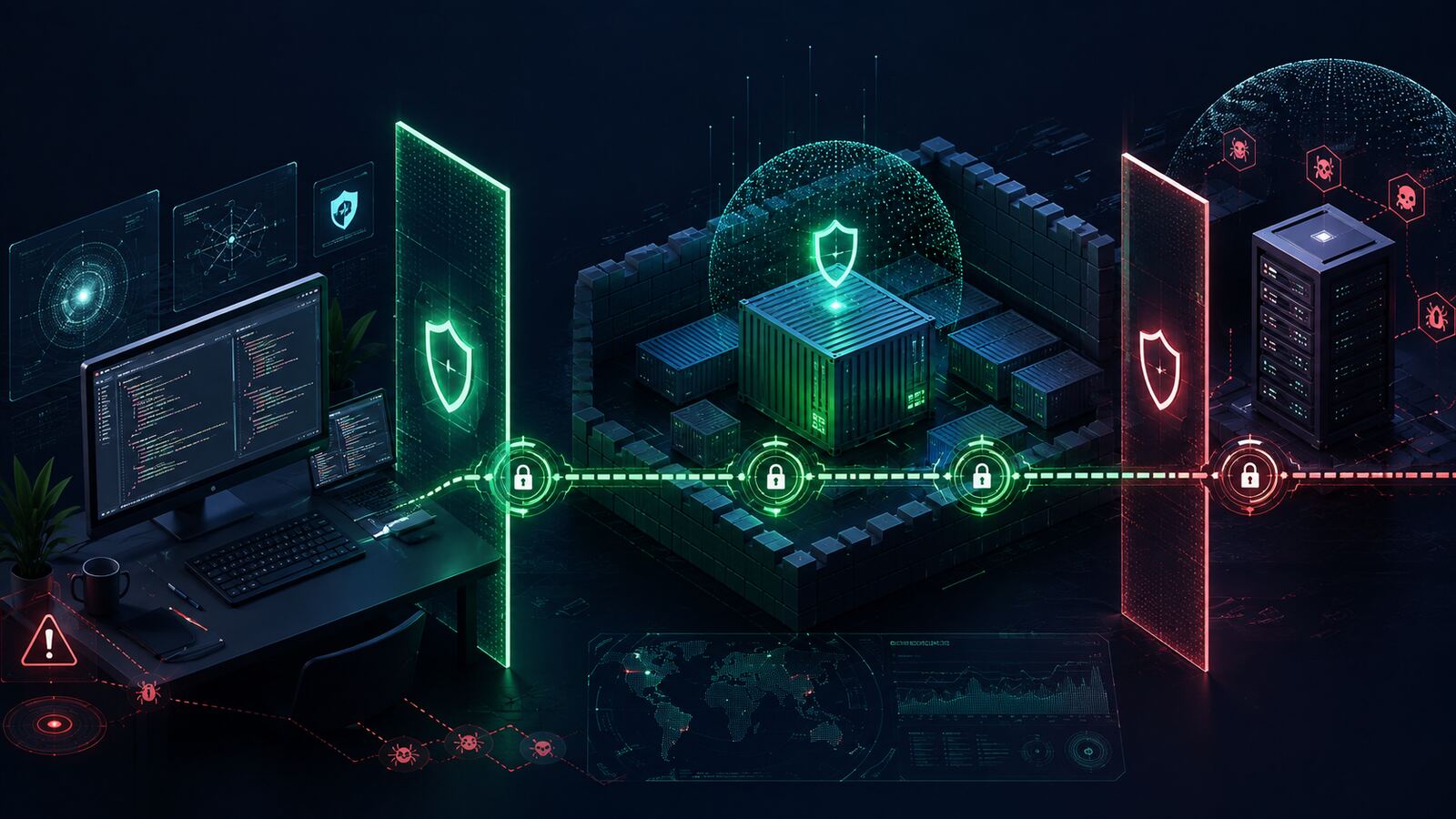
JetBrains published a fresh IntelliJ IDEA security update on September 7, 2026, and the most important lesson is not simply “update the IDE.” The more useful takeaway is that modern developer workstations are no longer just laptops running code editors. They are launch points into containers, remote development hosts, Kubernetes environments, package registries, source code, secrets, and build systems.
That makes IDE security a real control-plane issue for small businesses, software teams, MSPs, and government contractors. A trusted developer tool can quietly bridge local projects, cloud credentials, and remote execution environments. When that bridge has weak trust checks, missing authentication, or unsafe logging behavior, the blast radius can move well beyond one engineer’s machine.
What was reported
The strongest item in the new cluster is CVE-2026-86502, a high-severity issue in IntelliJ IDEA versions before 2026.2.2. According to the public vulnerability record, missing TLS and authentication on the IJent gRPC server could allow local code execution on Remote Development hosts. OpenCVE lists it with a CVSS 3.1 score of 8.4.
Another high-impact issue, CVE-2026-86504, involves a missing project-trust confirmation before building a Dev Container. In plain language: opening or building the wrong development environment could cross from “project setup” into host-level code execution. OpenCVE lists this one as CVSS 7.8.
The same IntelliJ IDEA update also covers related weaknesses involving Kubernetes spec-source URL fetching, project metadata leakage, terminal command exposure in logs, and a profiler pprof server issue in GoLand. JetBrains points users to the 2026.2.2 release and its fixed security issues page for remediation guidance.
Original sources: JetBrains fixed security issues, IntelliJ IDEA 2026.2.2 release note, and the NVD records for CVE-2026-86502 and CVE-2026-86504.
Why this matters
Developer tooling often gets treated as internal productivity software, not as part of the security boundary. That assumption is outdated. IDEs now connect to remote containers, local runtimes, cloud dev environments, SSH targets, Kubernetes clusters, AI coding assistants, package managers, CI systems, and secrets stored in environment variables.
For a government contractor or subcontractor, that means an IDE compromise can become a supply-chain event. Source code, proposal-related repositories, infrastructure-as-code templates, API keys, customer data, and deployment credentials may all be reachable from the same workstation. The attacker does not need to “hack production” first if the developer workstation already holds the paths into production.
Defensive takeaways
- Patch IntelliJ IDEA and related JetBrains tools quickly. Treat 2026.2.2 as more than a routine bugfix if your team uses Remote Development, Dev Containers, Kubernetes integrations, or profiler workflows.
- Audit remote development exposure. Review which hosts accept IDE-initiated remote workflows, what authentication protects them, and whether any dev services bind beyond localhost.
- Keep project trust prompts meaningful. Developers should not reflexively trust unknown repositories, coding challenge archives, contractor-supplied samples, or copied open-source projects.
- Run dev containers with least privilege. Avoid privileged containers, broad host mounts, Docker socket exposure, and automatic credential forwarding unless there is a documented reason.
- Segment developer credentials. A developer’s IDE should not hold long-lived production tokens. Prefer short-lived credentials, role separation, SSO enforcement, and vault-backed access.
- Monitor workstation-to-server patterns. Remote dev protocols, unexpected gRPC listeners, new local services, and unusual SSH/Kubernetes activity deserve telemetry, not blind trust.
Bulwark Black assessment
This cluster is a reminder that software supply-chain defense starts before code reaches CI. The workstation, IDE, container runtime, and remote development host are all part of the pipeline. If those pieces are implicitly trusted, a malicious project can become a foothold instead of just a bad download.
The practical move is to make developer tooling boringly controlled: patched fast, isolated by default, credential-minimized, monitored at the endpoint, and reviewed any time a new remote-development feature is enabled. That is especially important for small teams and government contractors, where one engineer may be touching code, infrastructure, compliance documents, and customer environments from the same machine.
Bottom line: do not wait for active exploitation headlines before tightening developer workstation controls. IDEs are now infrastructure clients. Defend them like it.