


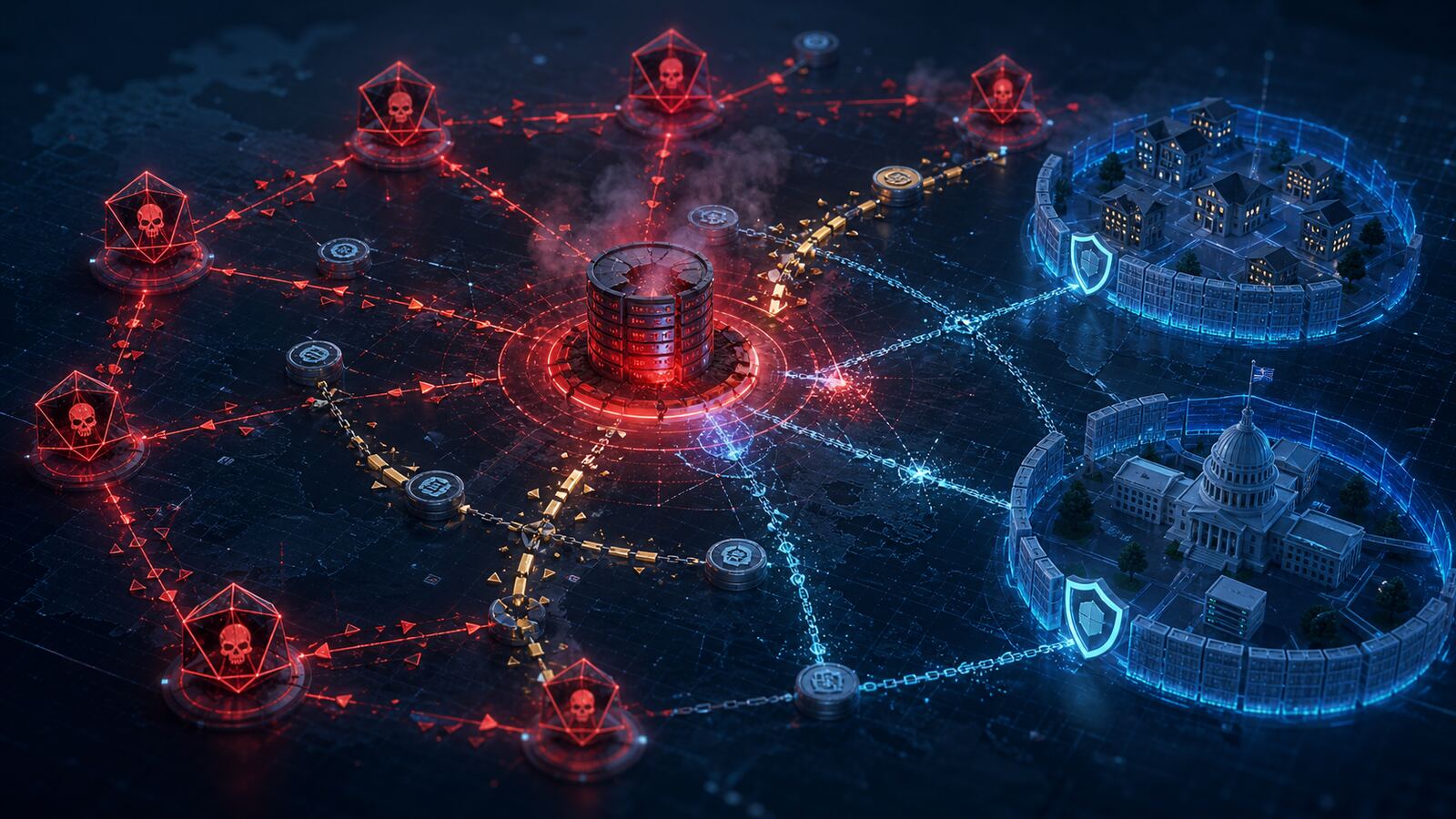
Check Point Research’s Q2 2026 ransomware review points to a market that is not simply “more of the same.” The biggest ransomware crews still dominate victim volume, but the ecosystem underneath them is getting wider, faster, and easier to enter. That matters for small businesses and government contractors because the next incident may not come from the name everyone is already tracking.
The report found that the top ten groups accounted for 57.6% of listed victims in Q2, down from 71% in Q1, while the number of active groups rose from 71 to 93. Victim volume stayed high at 2,139 leak-site victims for the quarter, essentially flat quarter over quarter and up 33% year over year. In plain English: ransomware did not slow down, but the operator landscape became less concentrated.
Source: Check Point Research — The State of Ransomware Q2 2026
Why the long tail matters
Defenders usually build playbooks around the most visible names: Qilin, Akira, LockBit successors, and whatever group is leading leak-site volume this month. That is still useful, but Q2 shows a dangerous shift. Smaller groups and newer brands can now move quickly enough to matter, especially when they can reuse leaked builders, buy access, rent infrastructure, outsource laundering, and lean on commodity infostealer logs.
The result is a ransomware market where “unknown group” does not mean “low capability.” A smaller crew may still have mature affiliate tooling, working encryption, stolen credentials, and access to brokers who already know which VPNs, firewalls, cloud consoles, and remote management tools are exposed.
The Gentlemen leak is the warning shot
Check Point highlighted The Gentlemen as a major Q2 mover. The group surged while Qilin remained highly active, and leaked internal material reportedly exposed a compact core team backed by a broader affiliate base. The important detail for defenders is not just the group’s ranking. It is the operational model: small teams can now assemble ransomware infrastructure quickly, coordinate affiliates, and iterate on tooling with less friction than older crews faced.
The report also notes first-party evidence that AI coding assistants helped build a ransomware management panel in roughly three days. That does not mean AI is magically creating elite ransomware groups. It means the boring engineering work—dashboards, panels, automation, glue code, victim tracking, and infrastructure management—is getting cheaper. Lower engineering cost means more crews can enter the market and more affiliates can operate with usable tooling.
Payment pressure is changing, not disappearing
One encouraging trend is the continued decline in payment rates. Check Point cites payment rates near a multi-year low around 23%, far below the 2019 era. But that does not make ransomware a solved problem. The market is splitting: large enterprises can still produce very large payments, while mid-market victims may refuse, negotiate down, or recover without paying.
For SMBs and government contractors, that split changes the attacker’s math. If the median payment is less reliable, criminals have stronger incentive to move faster, steal more data before encryption, pressure regulated environments, and hit more victims. Data theft, leak-site extortion, identity compromise, and business interruption remain the core pain points even when the victim never pays.
The defensive priority: reduce decision time
The report’s most practical warning is the shrinking exploitation window. Vulnerabilities can be weaponized within hours or days of disclosure. That is not compatible with monthly patch meetings and manual asset spreadsheets. Organizations need a way to answer three questions quickly: do we run the affected technology, is it exposed or reachable, and what compensating control can buy time if a patch cannot land today?
- Inventory edge systems first. VPNs, firewalls, hypervisors, RMM tools, identity portals, backup consoles, and internet-facing admin panels deserve faster review than normal endpoints.
- Prioritize identity telemetry. Ransomware response increasingly begins with stolen credentials, impossible travel, MFA fatigue, suspicious OAuth grants, and service-account abuse—not just malware alerts.
- Harden backups like production systems. Separate credentials, restrict admin paths, test restore speed, and alert on deletion, encryption, or policy changes.
- Build a 24-hour vulnerability triage lane. Do not wait for the next recurring meeting when a high-impact edge-device flaw drops.
- Pre-stage extortion decisions. Know who owns legal, insurance, customer notification, law enforcement contact, and public messaging before the leak-site timer starts.
Bottom line
Ransomware is becoming less dependent on a few famous brands. The top crews still matter, but the long tail is getting deeper and more operationally capable. For defenders, the answer is not to chase every new name. The answer is to reduce exposure windows, shorten triage time, protect identity systems, and make recovery boring enough that extortion loses leverage.
Original source: Check Point Research — The State of Ransomware Q2 2026.