
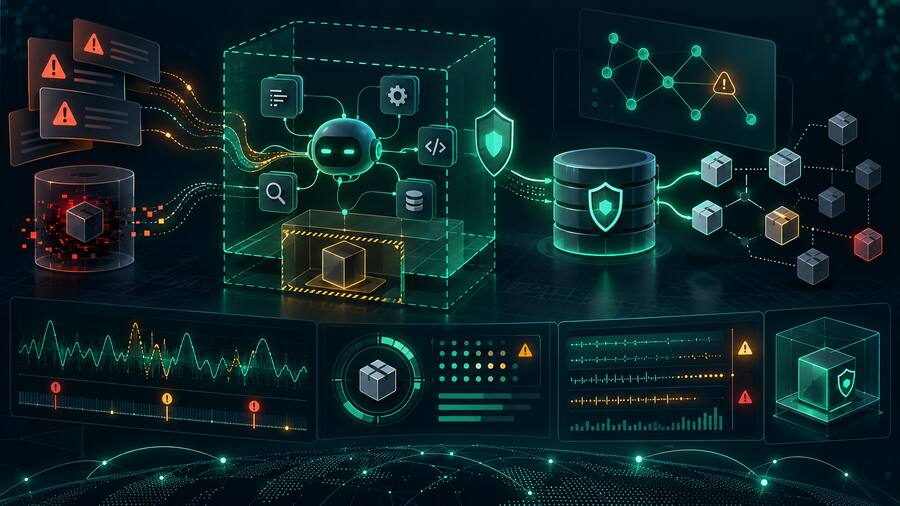







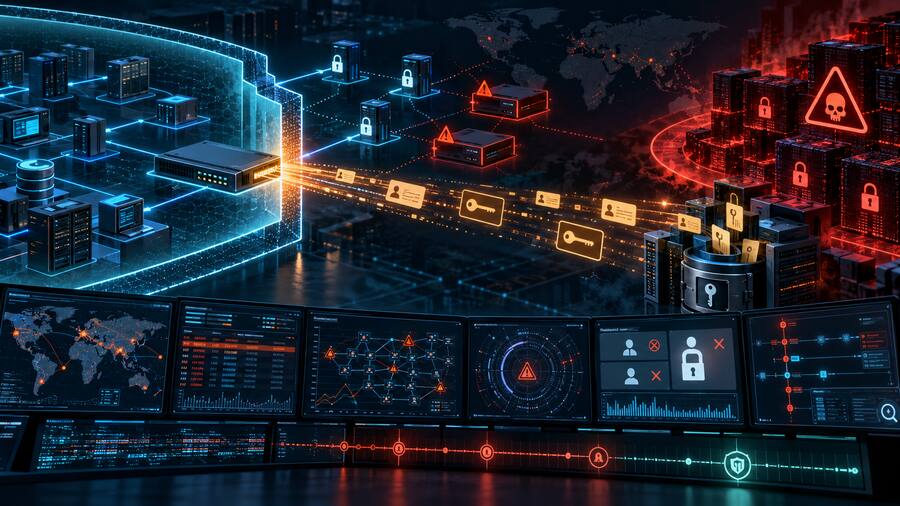


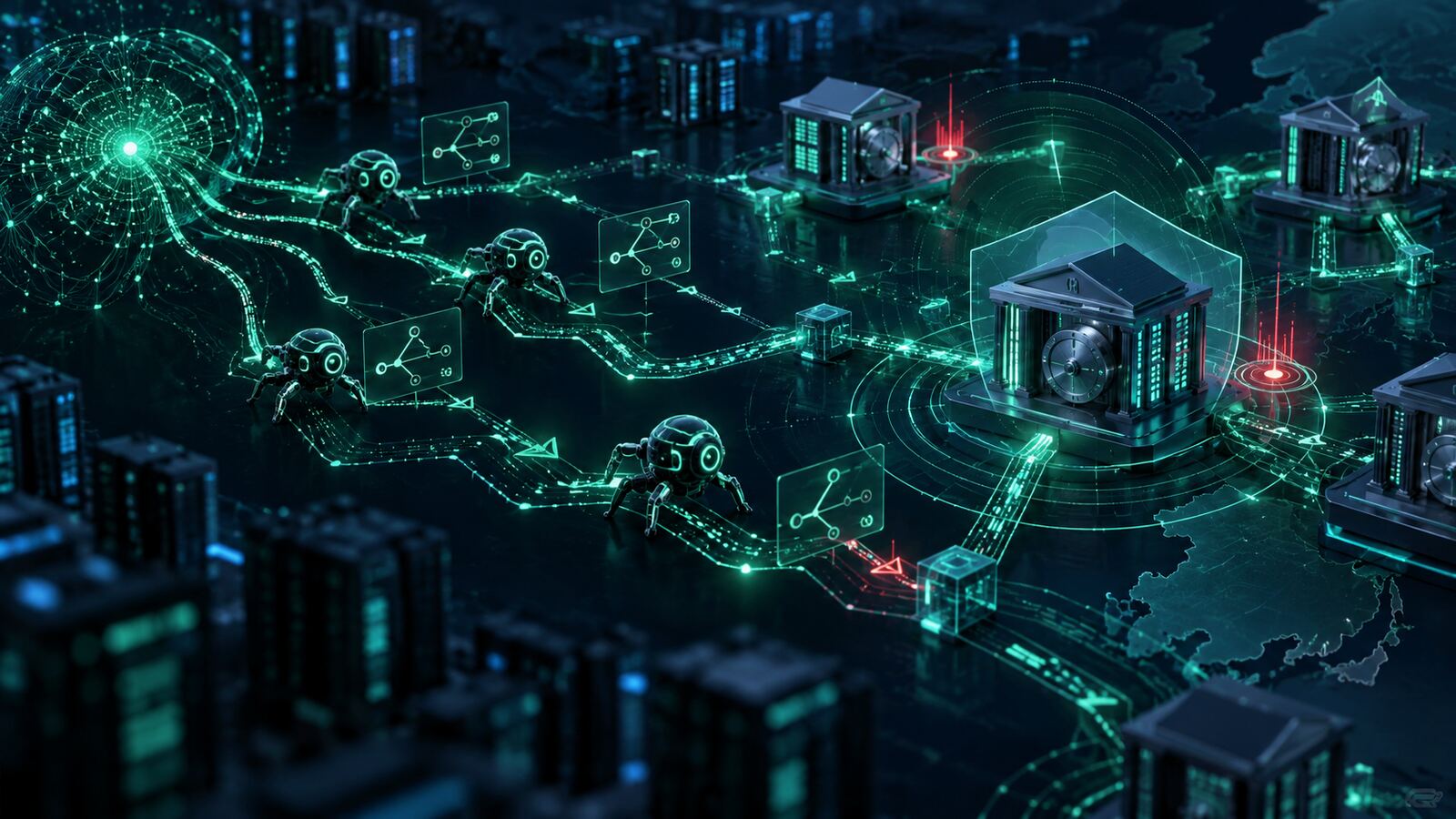
The South Korean banking incidents tied to ARTEX and Claude agents are a useful warning for defenders: agentic AI is no longer just a future threat model. It is already being used to move faster through reconnaissance, tooling, target validation, and post-compromise decision-making. The important part is not that the attacker used AI. The important part is that AI made an already-capable operator easier to scale.
CrowdStrike reported that infrastructure associated with attacks on South Korean financial organizations contained ARTEX configuration files, Claude Code session histories, and Claude memory files. BleepingComputer summarized the activity as affecting major Korean banks, exposing customer data and contributing to outages in some cases.
CrowdStrike assessed with moderate confidence that the operator was likely a Chinese-speaking, financially motivated threat actor. The actor reportedly used ARTEX, a Chinese-developed agentic penetration-testing tool, with DeepSeek as a primary backend and additional LLM sessions involving GLM and Grok. Open directories also exposed proxy infrastructure, attacker notes, and evidence that the actor asked where stolen Korean breach data could be sold.
What happened
The campaign was active from late September into early October 2026. According to CrowdStrike, analysis of exposed attacker-controlled directories showed two key pieces of infrastructure: one server hosting the ARTEX instance and another Hong Kong-based server used as primary attacker-controlled infrastructure. The exposed files gave researchers a rare look at how the operator used AI-assisted tooling during real intrusions rather than in a lab demonstration.
The target set reportedly overlapped with public reporting on South Korean financial-sector breaches. At least one reported incident involved a loan progress inquiry service used by financial brokers. Another involved an employee mobile work-support system. Those details matter because they point toward a common enterprise weakness: attackers do not always need to break the core banking platform if connected business applications, broker workflows, support systems, or mobile portals expose useful access paths.
Why this matters
The defender takeaway is not “AI hackers are magic.” They are not. The visible tradecraft still depended on infrastructure, proxies, tools, exposed services, credentials, target selection, and operational mistakes. In fact, the attacker’s own exposed directories appear to have been a major source of intelligence.
The shift is tempo. Agentic tooling can help an operator organize recon, generate commands, chain observations, summarize results, maintain context across sessions, and ask for next-step guidance. That can compress the time between discovery, testing, exploitation, data access, and monetization planning. For a defender, a compressed attack timeline means slower approval paths, manual-only triage, and unclear ownership become real liabilities.
For banks, credit unions, fintech providers, brokers, and government contractors handling financial data, this is especially relevant. Many of the most valuable attack paths live outside the obvious crown-jewel systems: partner portals, support tooling, mobile work apps, identity integrations, file-transfer workflows, and third-party service accounts.
The practical risk: AI-assisted operators still leave normal signals
This kind of activity should be treated as an incident-response and detection problem, not as science fiction. The tooling may be newer, but defenders can still hunt for familiar patterns:
- Unusual proxy and VPS access. CrowdStrike listed multiple proxy IPs tied to the activity. Organizations should baseline administrative and application access by geography, ASN, hosting provider, and session behavior.
- High-speed probing of business applications. AI-assisted tooling may accelerate parameter testing, endpoint discovery, and workflow abuse. Watch for repetitive but adaptive request patterns.
- Identity-driven movement. Broker portals, employee support systems, and mobile work platforms often sit close to sensitive data. Monitor privilege changes, impossible travel, new device enrollment, token reuse, and abnormal API calls.
- Data-access bursts. The monetization path was data theft, not necessarily ransomware encryption. Alert on unusual exports, report generation, customer-record queries, and downloads from nonstandard accounts.
- Attacker tooling mistakes. Open directories, exposed config files, command histories, and reused infrastructure remain high-value threat-intelligence leads.
Defensive takeaways for SMBs and government contractors
- Inventory internet-facing business workflows. Do not stop at VPNs and firewalls. Include customer portals, support portals, loan or case-status systems, vendor access, mobile work-support apps, and file-transfer services.
- Require phishing-resistant MFA for privileged and sensitive workflows. If a portal can expose customer, financial, payroll, contract, or CUI data, treat it as sensitive even if it is not “core IT.”
- Turn application logs into security logs. Authentication logs are not enough. Capture high-risk application events: bulk lookup, export, role changes, failed authorization checks, unusual search volume, and API-token creation.
- Set a fast triage lane for AI-speed attacks. If detections require three meetings before containment, the process is too slow. Pre-authorize account disablement, token revocation, session invalidation, and temporary portal restrictions.
- Watch your third-party paths. Brokers, MSPs, outsourced support teams, and vendors often create data access routes that attackers can abuse without touching the main environment.
- Hunt for automation behavior, not just malware. Repeated endpoint discovery, scripted login attempts, abnormal user-agent patterns, and rapid query sequences may be more important than finding a payload.
- Prepare for data-theft extortion. Build playbooks for verifying access, preserving logs, determining notification scope, and communicating with customers or contracting officers.
What to do this week
Start with the systems that would hurt most if their data were copied quietly. For each one, answer five questions: who can access it, how access is authenticated, what logs exist, who reviews those logs, and how quickly access can be revoked. If any answer is “we are not sure,” that system belongs on the short list.
Next, run a tabletop exercise around a realistic scenario: a support portal account is compromised, customer records are exported, and the attacker sends proof of theft. Test whether the team can identify the exposed data, disable sessions, preserve evidence, notify counsel, brief leadership, and decide whether regulators, customers, or contracting officers must be contacted.
Finally, tune detections around behavior that agentic tooling is likely to amplify: rapid recon, unusual query volume, repeated access failures followed by success, new infrastructure geographies, and administrative actions outside normal hours.
Bulwark Black assessment
ARTEX and Claude did not remove the need for infrastructure, access, and operational security. They changed the speed and structure of the attacker’s workflow. That is enough to matter.
Defenders should not wait for a perfect “AI attack” signature. The better move is to harden the business applications attackers are likely to target, collect the logs needed to reconstruct data access, and shorten the time from suspicious behavior to containment. AI-assisted intrusions are still intrusions. The organizations that win will be the ones that can detect and disrupt normal attacker steps before automation turns them into a campaign.
Sources: CrowdStrike — “Unknown Threat Actor Uses AI-Driven ARTEX to Target South Korean Finance”; BleepingComputer — “ARTEX AI, Claude agents used in cyberattacks on South Korean banks”.