


Amazon Threat Intelligence says multiple compromises of popular Node Package Manager (npm) libraries trace back to a DPRK-linked threat actor. The reported activity touches widely used packages including axios, debug, chalk, and typo-crypto, with the actor gaining maintainer-level access through social engineering and then shipping malicious package updates downstream.
What Amazon reported
Amazon assesses with medium confidence that the activity overlaps with the DPRK-linked cluster also tracked by parts of the security community as Sapphire Sleet, Stardust Chollima, BlueNoroff, CageyChameleon, and Alluring Pisces. The pattern is financially motivated: compromise a trusted package or maintainer once, then inherit access to thousands of developer workstations, CI runners, build jobs, and cloud environments that automatically consume that dependency.
The typo-crypto case appears to have been an earlier, smaller test. Amazon says the malicious file masqueraded as core-js, used a trigger value before downloading a second stage, and changed execution behavior across Windows, macOS, and Linux. Amazon reported two hashes to OSV/MAL-2026-3400 as part of the disclosure.
Why this matters for small teams and government contractors
This is not just a developer problem. Modern organizations build mission systems, internal dashboards, customer portals, security tools, and automation around open-source packages. A compromised dependency can become a credential-theft path, a CI/CD backdoor, or a way to reach cloud workloads long before a traditional perimeter alert fires.
For small businesses and defense-industrial-base vendors, the exposure is sharper because engineering, IT, and security responsibilities often sit with the same few people. If dependency updates are automatic and build environments hold long-lived cloud credentials, one malicious package update can create a direct route from a developer laptop to production infrastructure.
The tradecraft shift: malicious behavior across the dependency graph
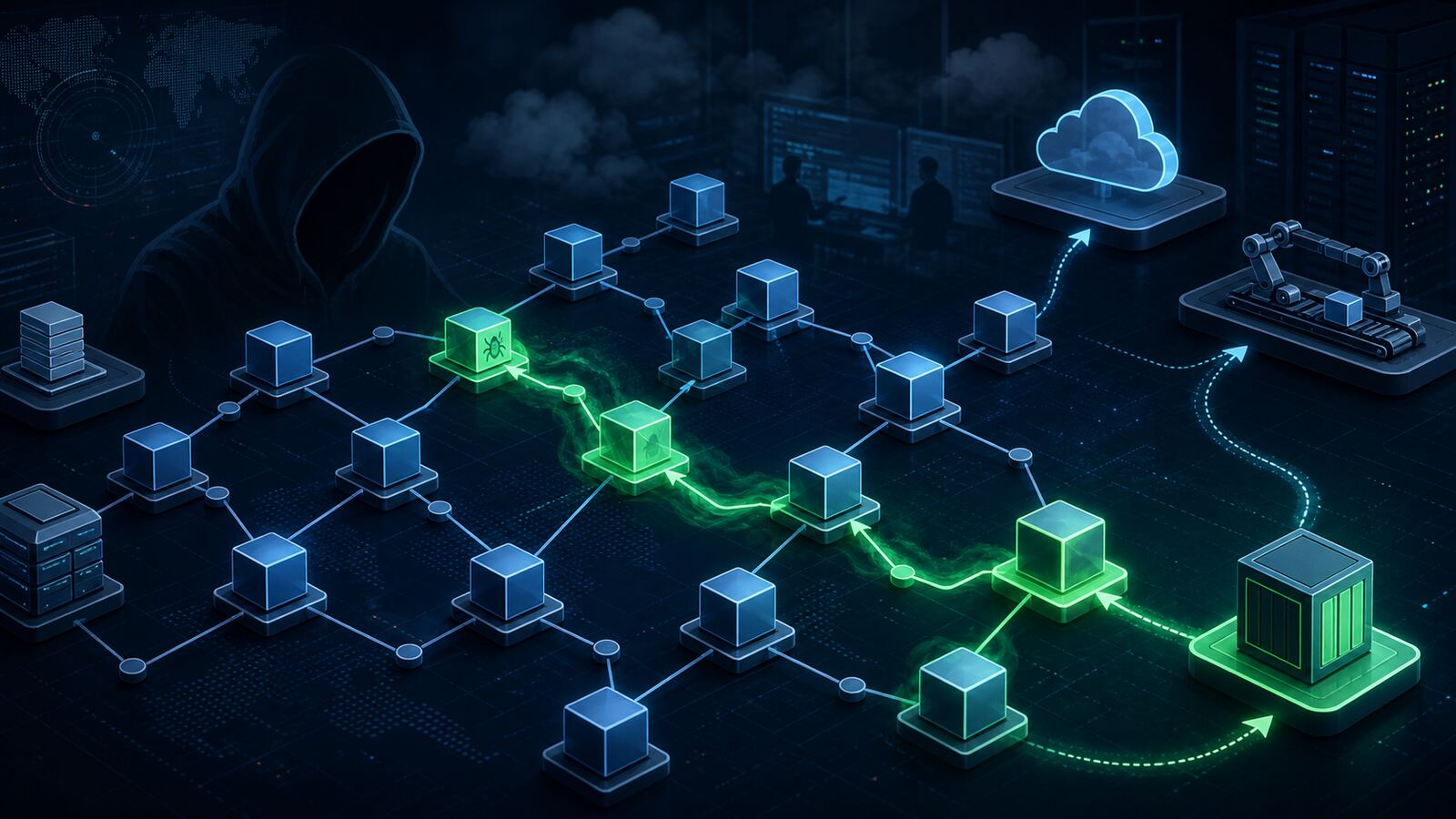
The important defensive point in Amazon’s write-up is that attackers are moving beyond obvious malicious packages. Amazon describes fragment-level techniques where one package stores encrypted configuration, another provides decryption logic, and a later component fetches or executes the real payload. Each piece can look harmless in isolation.
That breaks simple scanning models. If your dependency review only asks “does this package contain known bad code?” it may miss the actual question: “what behavior emerges when this dependency, its install scripts, its remote resources, and our build environment interact?”
Defensive takeaways
- Pin and stage dependency updates. Avoid blind automatic pulls into production builds. Use lockfiles, review diffs, and stage updates through test pipelines.
- Protect maintainer and package-manager accounts like privileged identities. Enforce phishing-resistant MFA where available, monitor token creation, and remove stale publishing tokens.
- Reduce CI/CD credential blast radius. Prefer short-lived workload identity over static secrets. Limit build runners to the minimum cloud permissions needed.
- Monitor install-time behavior. Alert on unexpected network calls, post-install hooks, shell execution, credential-file access, and outbound traffic from build jobs.
- Correlate dependencies as a graph. Look for packages that only become suspicious when combined with another dependency, runtime endpoint, or encrypted configuration source.
- Treat AI-assisted coding output as untrusted input. Verify package names and maintainers before installing dependencies suggested by coding assistants or autonomous agents.
Bulwark Black assessment
The headline is DPRK attribution, but the operational lesson is broader: dependency trust has become identity trust plus runtime behavior. A package can look clean, a maintainer can look legitimate, and a build can still become the execution point for a supply-chain intrusion.
The proper response is not panic-removing open source. It is adding guardrails around the places where open-source trust turns into execution: package publishing accounts, dependency updates, build runners, secrets, and egress. Organizations that can answer “what changed, who approved it, where did it execute, and what did it reach?” will be much harder targets when the next npm compromise lands.