


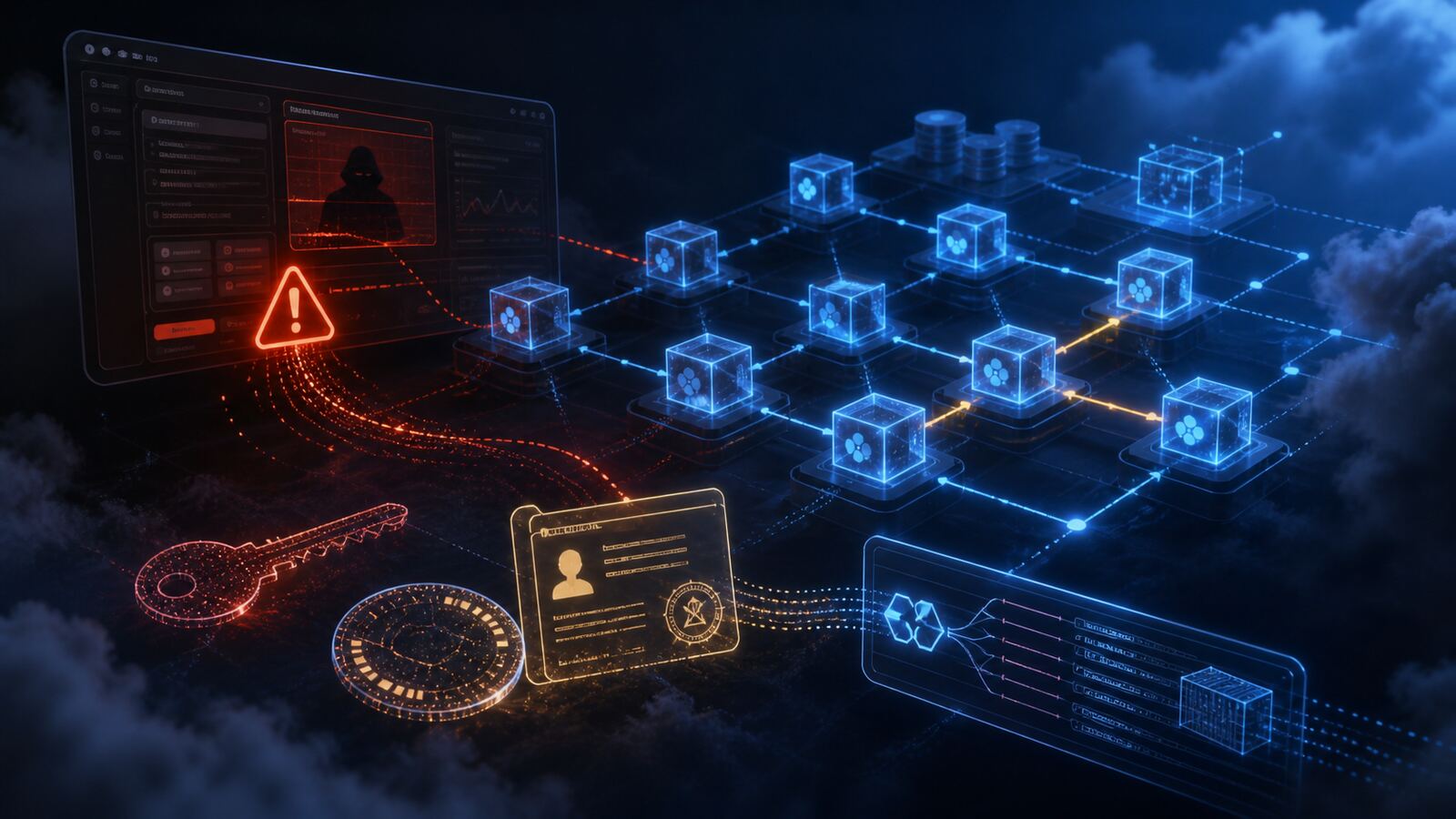
Kong Mesh is not just another infrastructure component. In many cloud-native environments, a service mesh becomes the connective tissue between workloads, identities, traffic policy, observability, and control-plane administration. That is why a fresh cluster of Kong Mesh vulnerabilities deserves more attention than a routine patch note.
According to NVD and Kong/Kuma advisories, multiple newly disclosed issues affect Kong Mesh components including kuma-cp, kuma-dp, and kumactl. The most concerning theme is not one isolated bug; it is the way several weaknesses touch service-mesh trust boundaries: admin bootstrap token exposure, signing material exposure, Envoy/data-plane configuration disclosure, workload identity confusion, token interception risk, and control-plane denial of service.
Original source: NVD entry for CVE-2026-18676. Related NVD entries include CVE-2026-18673, CVE-2026-18675, CVE-2026-18677, and CVE-2026-18678.
What was disclosed
The highest-risk item, CVE-2026-18676, describes a default kuma-cp configuration where a CORS misconfiguration can allow a malicious webpage visited by an operator to retrieve the admin JWT and signing material while the control plane is reachable from that browser. That is a dangerous pattern because it turns ordinary browsing from an administrator workstation into a possible service-mesh credential exposure path.
Other related disclosures expand the risk picture. CVE-2026-18673 involves unauthenticated access to a data-plane readiness service that can expose Envoy and mesh configuration to any caller that can reach TCP port 9902. CVE-2026-18677 affects some universal-mode workload identity scenarios where a data plane may obtain another workload's SPIFFE identity. CVE-2026-18678 describes token interception risk when kumactl disables TLS verification for an HTTPS control-plane profile without a CA certificate. CVE-2026-18675 is a denial-of-service issue in token validation that can crash kuma-cp with a malformed token.
Why it matters
Service meshes are often deployed to improve security: mutual TLS, identity-aware routing, traffic policy, observability, and zero-trust segmentation. But that also means the mesh control plane becomes a high-value target. If an attacker can steal mesh admin material, impersonate workload identities, or enumerate data-plane configuration, they may gain a clearer path to lateral movement inside environments that defenders assumed were segmented.
For SMBs and government contractors adopting Kubernetes, this is the practical lesson: cloud-native security tooling does not reduce operational responsibility. It changes where the crown jewels sit. The mesh is part of the security boundary, so it needs the same disciplined treatment as identity providers, VPNs, EDR consoles, and CI/CD platforms.
Defensive takeaways
- Patch Kong Mesh and Kuma components promptly. Prioritize affected
kuma-cp,kuma-dp, andkumactlversions referenced in the vendor advisories. - Treat the mesh control plane like a privileged admin system. Restrict browser reachability, require strong admin workstation hygiene, and avoid exposing control-plane interfaces broadly.
- Lock down data-plane readiness and admin surfaces. Review network policy around port 9902 and any Envoy/admin-style interfaces so only expected health-checking components can reach them.
- Verify TLS configuration for operators. Make sure
kumactlprofiles validate the control-plane certificate chain and do not silently trade convenience for token exposure. - Review workload identity assumptions. If MeshIdentity/SPIFFE templates derive from labels or tags, confirm tokens are bound tightly enough to prevent identity confusion.
- Monitor for unexpected control-plane restarts and xDS disruption. Repeated crashes may look like instability, but malformed-token DoS attempts should be investigated as security events.
Bulwark Black assessment
This disclosure cluster is a reminder that “zero trust” platforms still depend on very traditional controls: patching, least privilege, network segmentation, certificate validation, and admin workstation isolation. The more a platform centralizes trust, the more aggressively defenders need to protect that platform's control plane.
Organizations running service mesh infrastructure should not wait for exploitation chatter before acting. Inventory Kong Mesh/Kuma versions, verify the patched release path, restrict administrative reachability, and test whether data-plane or readiness endpoints are reachable from places they should not be. In service mesh security, the control plane is the mission-critical asset.