











CISA, the FBI, NSA, DC3, the U.S. Secret Service, and South Korea's National Police Agency have released a joint #StopRansomware advisory on Gunra, a ransomware-as-a-service operation that has moved from opportunistic encryption into a full enterprise intrusion playbook.
The immediate headline is familiar: attackers are exploiting known vulnerabilities in internet-facing Fortinet FortiOS and FortiProxy appliances, including CVE-2024-55591 and CVE-2025-24472. The more important lesson is that once a VPN or firewall is used for initial access, the response cannot stop at applying the missing patch.
Source: The Hacker News coverage of the Gunra advisory. Additional primary source: CISA joint advisory AA26-222A.
What happened
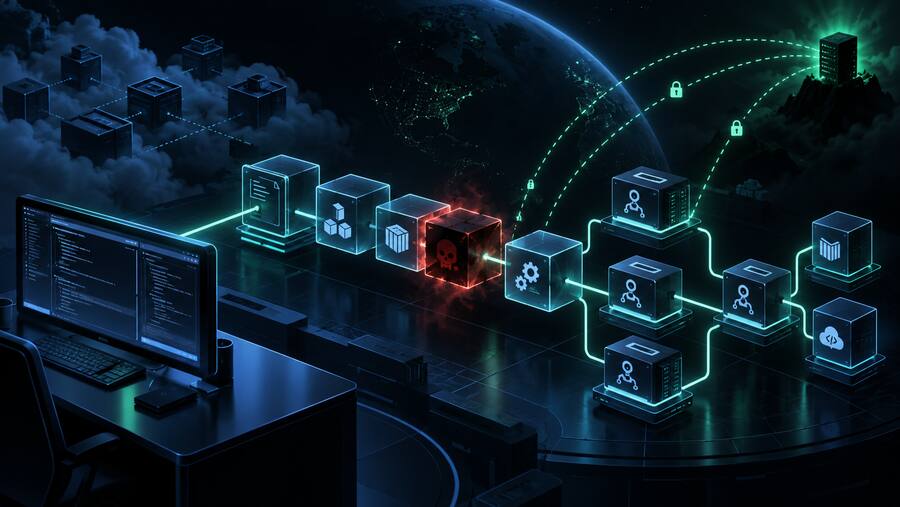
According to the joint advisory and reporting around it, Gunra actors have used exposed edge infrastructure to establish access, move laterally with tools such as Impacket, dump credentials from domain controllers, manipulate VPN and VDI authentication paths, exfiltrate sensitive data, and then deploy ransomware as part of a double-extortion model.
The advisory describes activity against government, healthcare, financial services, professional services, nonprofits, logistics, media, utilities, academia, retail, and other critical infrastructure sectors. That mix matters for small and mid-sized businesses and government contractors because the same control failures show up across environments: exposed remote access, weak segmentation, reusable privileged credentials, fragile backups, and incomplete logging.
Why this matters for SMBs and government contractors
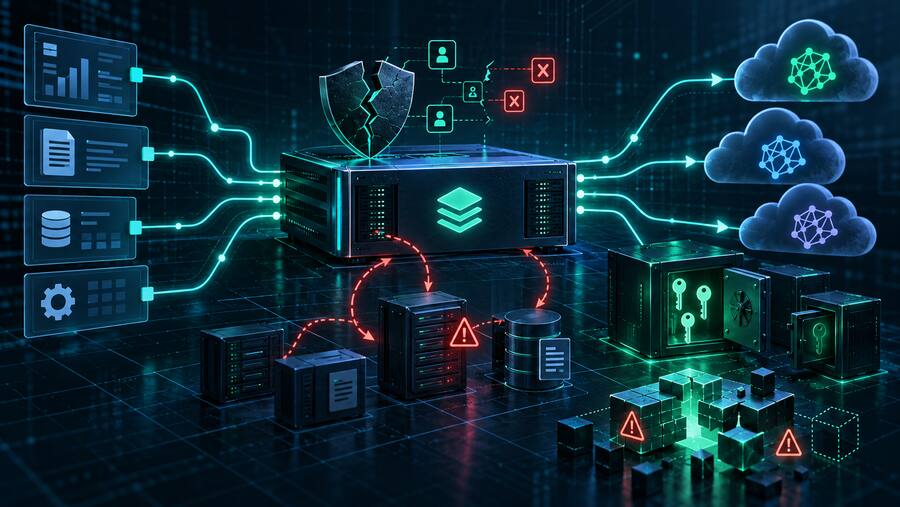
VPN appliances, firewalls, VDI portals, and RMM systems are not just infrastructure. They are control-plane assets. If an attacker owns them, they may be able to intercept credentials, hijack sessions, bypass MFA workflows, pivot into administrator workstations, and reach identity or backup systems before ransomware ever appears.
That is the dangerous part of the Gunra pattern. The encryption event is the visible business disruption, but the real damage begins earlier: credential theft, data staging, backup destruction, and tampering with authentication paths. Treating this as a simple vulnerability-management issue leaves the attacker’s foothold intact.
Defensive takeaways
- Patch exposed Fortinet systems urgently, but do not stop there. If affected appliances were internet-facing during the exposure window, assume investigation is required.
- Review VPN, firewall, and VDI admin activity. Look for new or modified accounts, disabled password-change requirements, unusual SSH tunneling, unexpected OpenSSH usage, and late-night administrative activity.
- Hunt for Impacket-style lateral movement. Prioritize evidence of psexec.py, smbclient.py, secretsdump.py, anomalous SMB admin shares, NTDS access, and pass-the-hash behavior.
- Validate MFA and session integrity. Edge compromise can shift the fight from password theft to session hijacking or authentication-flow tampering.
- Protect backups like production systems. Gunra reporting includes backup and archive deletion. Immutable, offline, tested backups are not optional ransomware controls.
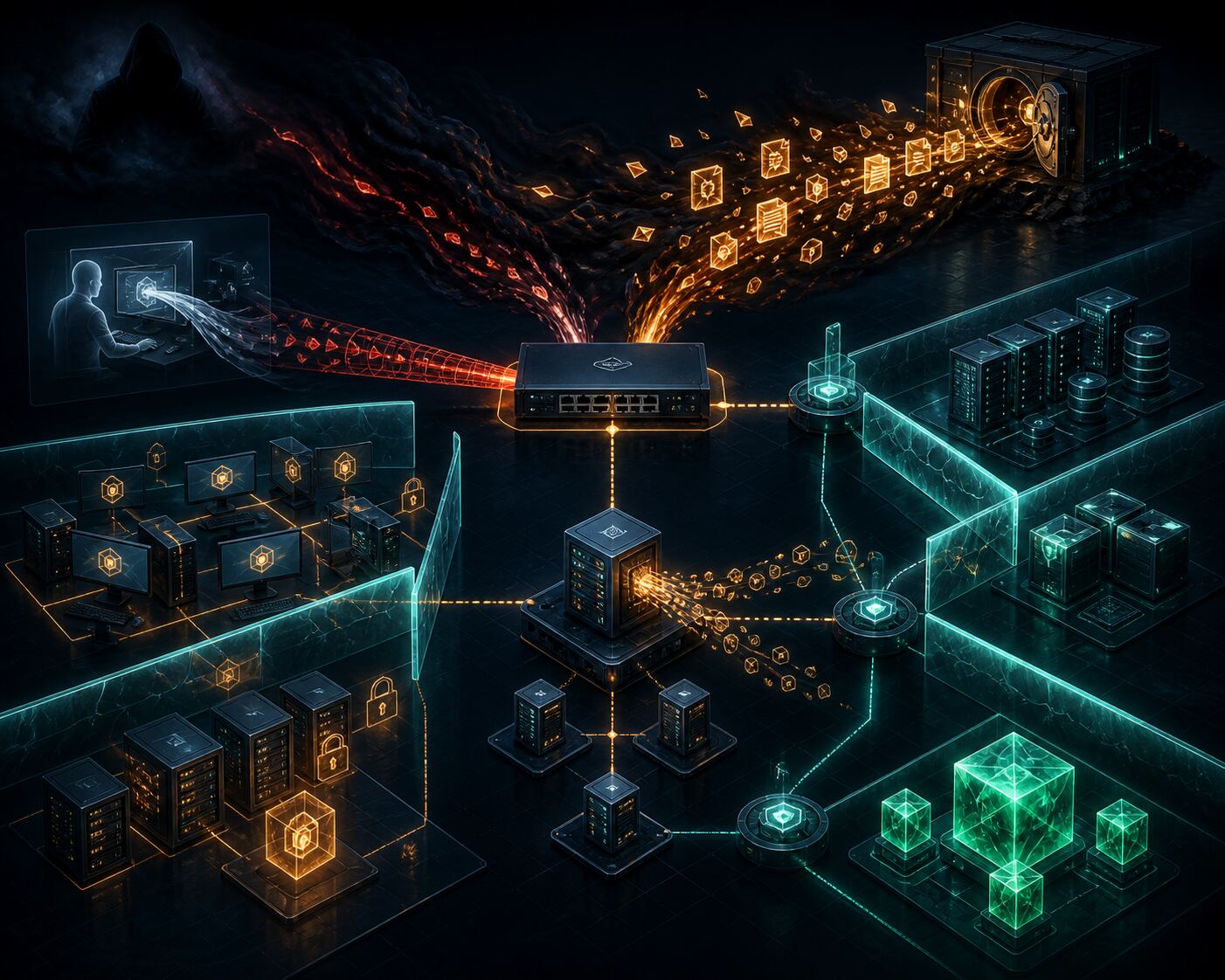
- Segment administrator workstations and management planes. A compromised VPN should not provide a clean path to domain controllers, backup consoles, VDI authentication servers, and storage systems.
Bulwark Black assessment
Gunra is another reminder that edge-device exploitation is becoming a business-continuity problem, not just an IT patching problem. For organizations with limited security staff, the practical move is to define a short incident checklist for every exploited remote-access device: patch, preserve logs, review accounts and sessions, rotate credentials, check identity infrastructure, validate backups, and look for lateral movement before declaring the event closed.
Government contractors should pay special attention because these environments often combine remote access, cloud file stores, compliance-sensitive data, and lean IT teams. The controls are not exotic, but they must be operational: asset visibility, exposure management, segmentation, backup testing, privileged-access review, and rapid log review after edge-device advisories.
More details and indicators are available in CISA advisory AA26-222A and CISA's release on Gunra ransomware targeting critical infrastructure sectors.